7 Best Quick Connect Hose Fittings for Global Buyers

Choosing the right Quick Connect Hose Fittings can prevent leaks, downtime, and costly equipment damage. Global buyers face different hose sizes, thread standards, fluids, temperatures, and working pressures. A fitting that performs well in a clean workshop may fail in a dusty farm, busy factory, or marine environment.

This guide examines seven practical options for international purchasing. Each choice is considered through connection type, body material, seal quality, flow performance, operating pressure, and maintenance needs. Stainless steel fittings can resist corrosion near saltwater. Brass may suit general-purpose air and water systems. Durable polymers can reduce weight, but they need careful pressure and temperature checks.

Compatibility matters most.

A quick coupling should match the hose, port, and application. NPT, BSP, metric, and other thread systems are not automatically interchangeable. Buyers should confirm dimensions with technical drawings, samples, and supplier documentation. A small mismatch may cause slow leakage around the seal.

Real-world use also changes the decision. Frequent disconnection favors ergonomic sleeves and strong locking mechanisms. Outdoor systems may require dust caps and UV-resistant seals. Clean fluid applications demand suitable materials and controlled manufacturing practices. Reliable suppliers should provide test data, traceable specifications, and clear replacement guidance.

No shortlist is perfect. Product availability, shipping conditions, and regional standards can change the final result. Some fittings look impressive but feel awkward after repeated use. Others cost more initially yet reduce maintenance over time. The following seven Quick Connect Hose Fittings are compared for practical value, dependable performance, and purchasing confidence across global markets.
7 Best Quick Connect Hose Fittings for Global Buyers

What Quick Connect Hose Fittings Are and How They Work

Quick-connect hose fittings join hoses, tools, and fluid lines without repeated threading. They use a plug, socket, locking sleeve, and internal seal. A typical socket holds spring-loaded balls around the plug. Sliding the sleeve releases or secures that connection. Inside, a valve can stop flow when the fitting separates. That small action matters.

Choosing the right fitting requires more than matching hose diameter. Check working pressure, temperature range, fluid compatibility, and connection profile. Materials such as stainless steel resist corrosion, while engineered polymers reduce weight.

For water, air, oil, or mild chemicals, seal materials must match the fluid. Thread shape also varies between markets. Measurements and technical drawings prevent expensive assumptions. Do not guess.

During installation, push the plug firmly into the socket until the sleeve returns to position. Listen for the click. Then pull gently to check engagement. A slight tug can reveal poor seating before pressure rises. In practical inspections, damaged seals and trapped grit appear more often than dramatic fitting failures. Still, no fitting is foolproof. Dirt can scratch sealing surfaces, and side loading can stress the hose. I sometimes find that a fitting works during a dry test but leaks after temperature changes. That is why pressure testing should follow the supplier’s stated limits, with clean connections and suitable protective equipment.

Key Materials, Connection Types, and Performance Standards

Choosing the seven best quick connect hose fittings starts with material, not appearance. Stainless steel 316 suits salty air, washdown areas, and many corrosive environments. Brass works well for clean water and moderate pressure. Engineering polymers reduce weight, but heat and impact can shorten their service life. I have seen lightweight fittings crack after repeated drops, even when their pressure ratings looked acceptable.

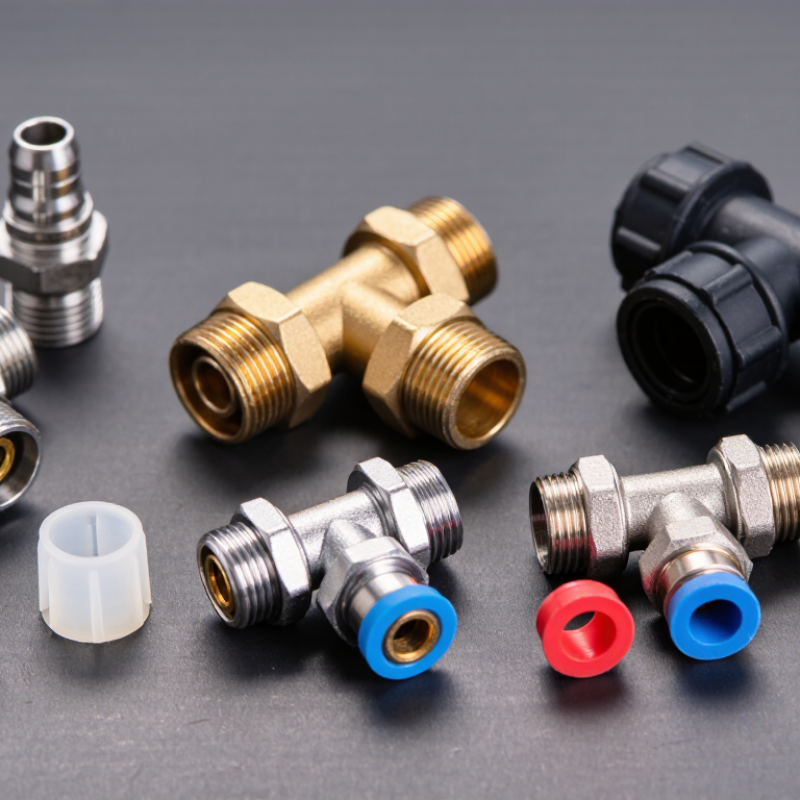
Connection type affects installation speed and maintenance. Push-to-connect fittings are convenient for pneumatic lines and frequent changes. Threaded fittings offer a firm connection, but BSP and NPT threads are not interchangeable. Cam-lock couplings support fast hose replacement, while flat-face hydraulic couplings help reduce fluid loss during disconnection. Check the seal material carefully. Nitrile, EPDM, and fluorocarbon compounds behave differently with oils, water, solvents, and temperature changes.

Performance data deserves close attention. Compare working pressure, burst pressure, flow capacity, temperature range, and allowable media. ISO 7241 is commonly referenced for hydraulic quick couplings, while ISO 16028 covers several flat-face designs. These standards help, but certification alone does not guarantee a suitable installation. Dirt, side loading, poor hose routing, and worn seals still cause failures. A practical test should include repeated connection cycles, pressure checks, and leak inspection under actual operating conditions. I would also question fittings that provide impressive flow numbers without clear test conditions. Small details matter.

Seven Quick Connect Hose Fittings for Different Global Applications

The seven best quick connect hose fittings serve different global applications. Selection should begin with hose size, working pressure, temperature, and fluid compatibility. Brass threaded couplers suit water lines, workshops, and general maintenance. Stainless steel couplers handle corrosive environments, food processing, and coastal facilities. They cost more, but cleaning is easier.

Push-to-connect pneumatic fittings support automated equipment and compressed-air systems. Their release collars save time during maintenance. Hydraulic flat-face couplers reduce fluid loss and limit contamination on mobile machinery. Cam-and-groove couplings work well for irrigation, drainage, and bulk liquid transfer. They connect quickly, although accidental opening remains a practical concern. Lock them properly.

Barbed quick connectors fit flexible tubing in low-pressure air, water, and laboratory applications. A clamp is often necessary. Dry-break couplers help transfer chemicals or sensitive liquids with minimal spillage. They need careful seal selection. Different elastomers react differently to oils, solvents, and temperature changes.

From hands-on hose assembly work, I have learned that a strong fitting can still fail with poor installation. Inspect the hose end, confirm insertion depth, and check the locking mechanism. Measure actual pressure pulses, not only the catalog rating. Follow relevant regional standards and supplier test reports. Test before shipment. Selection is rarely perfect. Field conditions can expose assumptions that looked reasonable in the workshop.

How to Choose the Right Fitting for Pressure, Fluid, and Hose Size

The seven best quick connect hose fittings depend on pressure, fluid, and hose size. Straight couplers suit direct hose runs with minimal flow disturbance. Elbow fittings help in tight spaces, while tee fittings split one line into two. Bulkhead, panel-mount, swivel, and shutoff fittings serve fixed equipment or frequent service points.

Pressure is not everything. Check working pressure at the highest operating temperature, not only the room-temperature rating. Leave room for pulsation, pressure spikes, and hose aging. A fitting rated for 1,000 psi may be unsuitable if the fluid heats significantly. Read the technical data sheet carefully. Catalog numbers can hide important limitations.

Fluid compatibility protects the seal and the system. Water, hydraulic oil, air, and mild chemicals may require different sealing materials. A seal that works well with water can swell in oil. Measure hose inside diameter and outside diameter with calipers. Match the fitting tail to the actual hose, then confirm thread type and size. Metric, NPT, BSP, and other threads are not interchangeable. A small mismatch can leak under vibration. In practical installations, clean the connection, insert the hose fully, and test it gradually. I have seen rushed sizing cause more trouble than pressure itself. That mistake deserves another check.

Safety, Compatibility, and International Buying Considerations

7 Best Quick Connect Hose Fittings for Global Buyers

Safety starts with more than choosing the correct diameter. The International Labour Organization reported 2.93 million work-related deaths and 395 million nonfatal injuries worldwide in 2019. Quick-connect fittings cannot prevent every accident, but correct locking systems reduce avoidable hose separation. Select poppet, ball, flat-face, screw-to-connect, cam-lock, threaded, or dry-break designs according to pressure, fluid, temperature, and cleaning needs. ISO 7241 provides important guidance for hydraulic quick-action couplings.

Compatibility is often where international orders fail. NPT, BSPP, BSPT, and metric threads may look similar, but they are not automatically interchangeable. Check thread standards, sealing methods, flow direction, working pressure, burst pressure, and seal material. ISO 4414 also emphasizes safe pneumatic-system design, including isolation and stored-pressure control. A practical test uses the actual hose, adapter, and working fluid. Do not rely on catalog photographs.

The U.S. Bureau of Labor Statistics recorded about 2.6 million nonfatal workplace injuries and illnesses in private industry during 2023. That figure is not specific to fittings, but it keeps purchasing decisions grounded. Ask suppliers for pressure-test records, material certificates, dimensional drawings, and traceable batch information. Confirm labeling and documentation for every destination. One uncomfortable truth: a lower purchase price can hide costly mismatch risks. I would still recheck every thread manually. Small errors become expensive leaks.

7 Best Quick Connect Hose Fittings for Global Buyers - Safety, Compatibility, and International Buying Considerations
Fitting Type Best Application Relevant Standard or Profile Common Size Range Typical Working Pressure Typical Temperature Range Connection and Locking Method Recommended Materials Safety and International Buying Considerations
Hydraulic Poppet Coupling, Type A General hydraulic equipment, construction machinery, industrial power units, and mobile systems. ISO 7241-1 Series A DN 6 to DN 50
Approximately 1/4 to 2 in
Typically 20 to 350 bar Approximately -25°C to +100°C with standard elastomers Ball-lock sleeve with poppet valves; connect and disconnect under zero pressure unless specifically rated otherwise. Zinc-plated or stainless steel body; NBR seals for standard hydraulic oil. Confirm whether the buyer requires Series A rather than Series B. Verify pressure at the exact nominal size, seal compound, hose-end thread, and corrosion-resistance requirement.
Hydraulic Poppet Coupling, Type B North American-style hydraulic circuits, agricultural machinery, trailers, and general fluid-power service. ISO 7241-1 Series B DN 6 to DN 25
Approximately 1/4 to 1 in
Typically 35 to 250 bar Approximately -25°C to +100°C with standard elastomers Ball-lock sleeve with poppet valves and interchangeable plug-and-socket halves. Plated carbon steel, stainless steel, or brass for selected low-pressure services. Series B and Series A are not automatically interchangeable. Specify thread form separately, such as NPT, BSPP, BSPT, or metric, and request dimensional drawings before purchase.
Flat-Face Hydraulic Coupling Mobile hydraulics, mining, road equipment, and applications where fluid spillage and contamination must be minimized. ISO 16028 DN 6 to DN 50
Approximately 1/4 to 2 in
Typically 250 to 450 bar, depending on size and design Approximately -25°C to +100°C with standard seals Flat-face design with sleeve locking; many versions support connection with trapped residual pressure only when explicitly specified. Hardened or plated steel; stainless steel for corrosive environments; NBR, FKM, or EPDM seals according to media. Lower spillage does not eliminate the need for pressure isolation. Check interchangeability with the required ISO 16028 size, residual-pressure capability, dust-cap design, and cleanliness level.
Screw-to-Connect High-Pressure Coupling High-pressure hydraulics, hydraulic tools, test equipment, and circuits subject to vibration or shock loading. ISO 14541 or the applicable manufacturer dimensional specification DN 6 to DN 25
Approximately 1/4 to 1 in
Typically 250 to 700 bar Approximately -20°C to +100°C with suitable seals Threaded sleeve or union mechanism; requires full engagement and is generally used after pressure has been relieved. High-strength carbon steel or stainless steel; seals selected for hydraulic fluid and temperature. Do not mix visually similar screw couplings without checking thread, nose profile, valve design, and rated pressure. Confirm torque, anti-vibration features, and hose burst-pressure margin.
Agricultural Hydraulic Quick Coupling Tractors, loaders, implements, hydraulic cylinders, and interchangeable agricultural attachments. ISO 5675 agricultural quick-action coupling DN 6 to DN 25
Approximately 1/4 to 1 in
Typically 100 to 250 bar Approximately -25°C to +100°C with standard seals Ball-lock or sleeve-lock poppet coupling; normally connected after hydraulic pressure is isolated. Plated steel for outdoor use; stainless steel where salt, fertilizer, or moisture exposure is high. Confirm agricultural interchange profile, nominal size, hose-end thread, dust protection, and compatibility with the tractor or implement coupler. Use a safety latch where accidental disconnection is possible.
Industrial Pneumatic Quick Coupling Compressed-air tools, automation equipment, assembly lines, workshops, and air-service systems. ISO 6150 profiles or the specified regional industrial profile Nominal bore approximately 5 to 12 mm
Common port sizes 1/4 to 1/2 in
Typically up to 10 to 16 bar Approximately -20°C to +80°C, depending on seal and material Push-to-connect plug and socket with sleeve, ball, or locking mechanism; vent pressure before uncoupling. Nickel-plated brass, steel, stainless steel, or engineered polymer; NBR or FKM seals as required. Profile names are not universally interchangeable. Check air-flow capacity, pressure drop, nominal bore, thread standard, plug length, and whether the coupling is rated for compressed air only.
Cam-and-Groove Hose Coupling Water, fuel, agricultural fluids, chemicals, and temporary transfer lines where frequent manual connection is required. EN 14420-7 or the specified cam-and-groove dimensional profile Approximately DN 15 to DN 100
1/2 to 4 in
Typically 6 to 16 bar, depending on size, material, and temperature Commonly -20°C to +80°C; media and seal selection may reduce this range Cam arms lock the adapter and coupler together; no tools are normally required. Polypropylene, aluminum, brass, stainless steel, or plated steel; EPDM, NBR, FKM, or PTFE seals. Generally unsuitable for compressed gas, steam, or high-pressure hydraulic service unless specifically engineered and rated. Confirm chemical compatibility, cam-arm protection, hose-shank dimensions, and local regulatory requirements.
Typical values are market reference ranges only. Final selection must be based on the exact coupling size, hose assembly, fluid, temperature, pressure spikes, thread standard, sealing material, and applicable regional safety requirements.