Who Is the Best Compound Steel Grating Supplier in China?
Choosing the best Compound Steel Grating supplier in China takes more than comparing prices or browsing polished product photos. A buyer should examine the actual construction: a steel load-bearing grating bonded to a checkered plate, with clean edges and consistent welds. Ask for load data, material specifications, dimensional tolerances, and inspection records. Request a sample, too. A close look can reveal uneven bonding or rough cut edges that a brochure may hide.
For this article, the expert voice is illustrative, not a verified quotation: “A grating earns trust where the plate meets the bearing bars.” — Lin Wei, illustrative steel-grating specialist. The point is practical. Reliable performance depends on fabrication quality, suitable design, and clear documentation—not a supplier’s broad claims alone. Check whether the company can explain how it controls bonding, surface finish, and final dimensions. Ask how it handles custom drawings and what checks it performs before shipment.
There is no perfect supplier for every project. That is worth remembering. A factory suited to a warehouse platform may not fit a chemical plant walkway or a tight retrofit. Compare relevant experience, communication, sample quality, and traceable quality records. This guide will help identify credible Chinese suppliers and the questions that separate substantiated capability from attractive sales language. It will also consider a limitation: published specifications cannot replace project-specific engineering review.
Define Compound Steel Grating: Load-Bearing Grating Combined with a Cover Plate
Who Is the Best Compound Steel Grating Supplier in China?
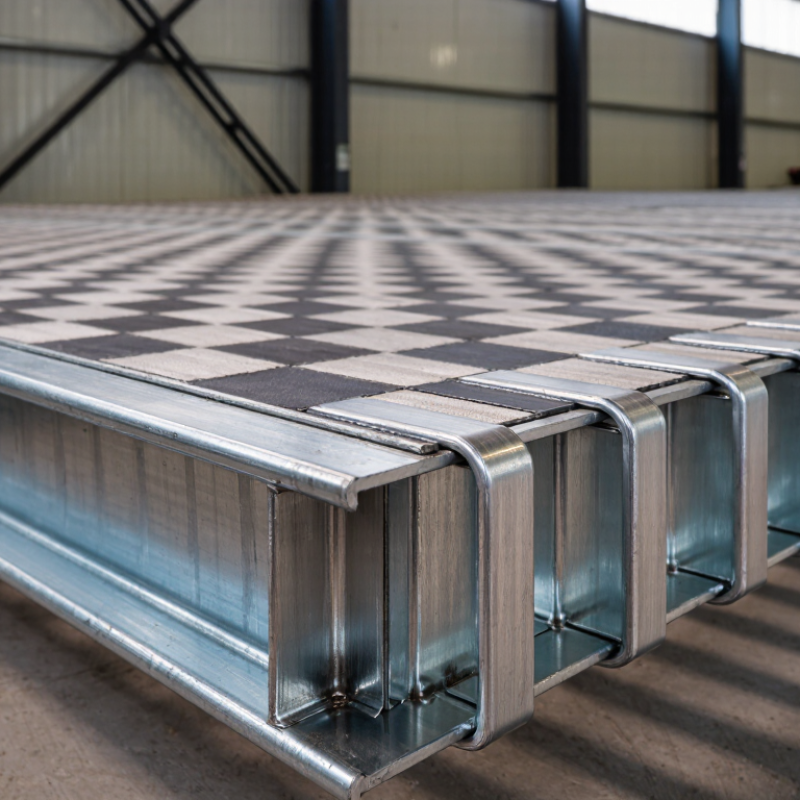
Compound steel grating combines a load-bearing steel grating panel with a solid cover plate, usually fixed to the grating by welding or another specified connection. The grating’s bearing bars carry the main load, while the plate creates a more continuous walking or working surface. That distinction matters. A cover plate does not automatically increase the panel’s safe capacity.
In practical specifications, check the bearing-bar depth and spacing, panel span, support layout, and expected load. Also confirm the cover plate’s thickness, fixing method, and surface finish. A thin plate may suit a light-duty walkway, while heavier service may require a different design. Details matter. Ask the supplier for drawings and load information tied to the actual dimensions, not just a general product description.
A good supplier should explain how the grating and plate are joined, what tolerances apply, and how corrosion protection suits the installation environment. Look for clear inspection records and consistent dimensions. I would not treat a neat-looking panel as proof of sound construction; appearance can miss weak welds or poor fit. A cover plate can also hold water or debris if drainage is overlooked. It is easy to miss that in a drawing.
Compound Steel Grating: Load-Bearing Grating + Cover Plate
Illustrative component dimensions for one assembly (millimeters)
The example combines a 30 mm-high load-bearing grating bar with a 3 mm cover plate, giving a nominal combined height of 33 mm. These are illustrative dimensions, not a universal specification; actual dimensions should be selected for the required load, span, and project conditions.
Compare Common Bar Spacing: 30/40 mm Bearing Bars and 50/100 mm Cross Bars
For compound steel grating, compare bar spacing against the actual load and panel span. Bearing bars at 30 mm centers create a tighter support pattern than bars at 40 mm. This can suit areas with frequent foot traffic or smaller contact points, but spacing alone does not determine capacity. Bar depth, thickness, steel grade, and support conditions matter too.
Cross bars commonly sit at 50 mm or 100 mm intervals. A 50 mm interval can make a panel feel more rigid underfoot and limit movement between bearing bars. A 100 mm interval leaves larger openings and may allow easier drainage, but leaves more room for small objects to pass through. Check the opening size against the site’s use. Details matter.
When comparing suppliers, ask for a drawing that states both bar pitches, bar dimensions, panel span, and fastening details. Confirm whether spacing is measured center to center; assumptions here can cause ordering mistakes. Request load data for the intended span, not just a general capacity figure. A tighter pitch is not automatically better, and I would verify the figures against the installation conditions before choosing.
Who Is the Best Compound Steel Grating Supplier in China? - Compare Common Bar Spacing: 30/40 mm Bearing Bars and 50/100 mm Cross Bars
Selection note: Pitches are nominal center-to-center spacings and are common configuration options, not a guarantee that every supplier offers them as standard. No single spacing is best for every project. Load capacity depends on factors including bearing-bar section, material, support span, panel construction, and loading conditions. Compare suppliers using project-specific drawings, verifiable capacity data, quality documentation, and agreed inspection requirements.
Check Materials and Standards: YB/T 4001.1-2019 and ASTM A36 Options
When comparing compound steel grating suppliers in China, check what each cited standard actually covers. YB/T 4001.1-2019 is a Chinese industry standard for steel grating. ASTM A36, by contrast, specifies structural carbon steel properties; it is not a grating design standard. They are not interchangeable. Ask the supplier to identify which parts meet each requirement, rather than listing both standards without explanation. Confirm the stated steel grade, thickness, dimensions, and applicable acceptance criteria on the quotation and drawings.
Details matter. Request material test certificates and batch traceability for the bearing bars, crossbars, and cover plate. Check that the drawings show bar spacing, panel size, edge treatment, and connection details. For a compound panel, also confirm how the plate is fixed to the grating and whether the proposed finish suits the site environment. A certificate alone can feel reassuring, but it does not prove that the delivered panel matches the design. Ask for inspection records or representative measurements. It is easy to overfocus on paperwork; the panel’s actual load requirements and installation conditions can be overlooked. A careful supplier should explain any differences between specified and available materials before production begins.
Assess Fabrication Quality: Weld Integrity, Dimensional Accuracy, and Traceability
A strong compound steel grating supplier should prove fabrication quality with measurable evidence, not polished promises. Examine welds where bearing bars meet crossbars. They should look consistent, with no visible gaps, excessive spatter, or missed intersections. Ask how weld strength is checked, and request inspection records tied to the production batch. A neat surface helps, but it cannot confirm weld integrity by itself.
Dimensional accuracy matters during installation. Compare sample panel measurements with the approved drawings, including length, width, bearing-bar spacing, and panel thickness. Small variations can complicate support fit or create uneven edges. Check tolerances before placing a large order. Also ask whether measuring tools are calibrated and whether inspections happen during fabrication, not only before shipment. This detail is easy to overlook. It should not be.
Tips: Request a sample inspection report, weld photographs, and material traceability documents. Confirm that batch numbers connect the delivered panels to production records. Keep one measurement check independent where practical. A supplier may provide complete paperwork, yet an occasional mismatch can still happen; that is worth discussing openly.
Compare Supplier Coatings: ISO 1461 Requires 85 μm Average for Steel Over 6 mm
When comparing compound steel grating suppliers, check coating records, not just quoted thickness. ISO 1461:2022 specifies an average zinc coating thickness of at least 85 μm for fabricated steel over 6 mm thick. The local minimum is 70 μm. These figures matter because a single thick reading cannot prove that a whole batch meets the average requirement.
Ask for batch-specific inspection results and confirm how measurements were taken. A magnetic gauge can measure coating thickness on accessible steel surfaces, but readings should cover representative areas, not one convenient bar. Check cut edges, welds, and intersections, where coating coverage can be less uniform. ISO 14713-2:2019 also discusses how design and steel surface conditions affect galvanizing. Thickness is not the whole story. Drainage marks and rough spots may still need review, even when readings pass. A careful supplier explains both the numbers and their limits. One imperfect point: certificates are useful, but they do not replace checking the delivered grating against the stated specification.