
Best Natural Gas Generator Manufacturers in China?

China’s Natural Gas Generator manufacturers serve a market shaped by rising electricity needs, distributed power projects, and demand for dependable backup systems. The International Energy Agency’s Electricity 2024 report projected global electricity demand would grow by about 3.4% in 2024. That figure is a forecast, not proof of generator sales, but it helps explain why buyers are comparing gas-fired equipment for factories, commercial sites, and remote facilities.

IEA Executive Director Fatih Birol captured the wider shift in the agency’s World Energy Outlook 2024: “The Age of Electricity is here.” For buyers, the practical question is more specific: can a supplier deliver stable output, reasonable fuel consumption, clear test records, and responsive technical support? A polished brochure is not enough. Commissioning details matter.

This guide examines leading Natural Gas Generator manufacturers in China through those operational questions. It considers product range, engine and alternator specifications, customization, quality documentation, and after-sales service. Buyers should also check site conditions, gas composition, load profile, and local emissions requirements before comparing quotations. A 500 kW set running at a steady factory load is not the same purchase as a standby unit facing sudden starts and long idle periods. Small differences matter. Public information can be uneven, and published ratings may not match real operating conditions. Treat rankings as a starting point, then verify claims with technical documents, references, and a direct factory discussion.
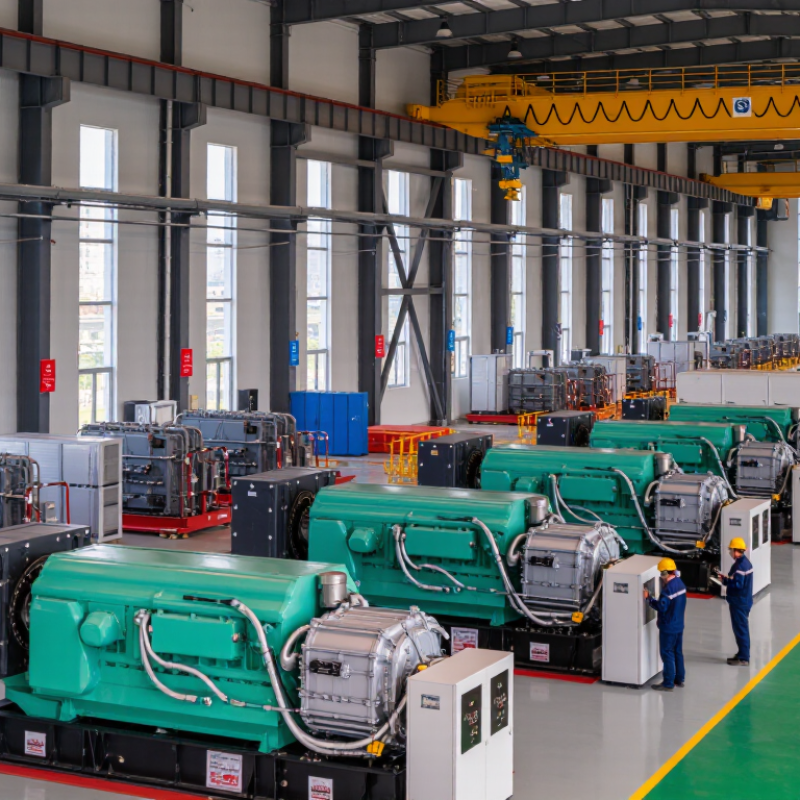
Best Natural Gas Generator Manufacturers in China?

Natural Gas Generators in China: Definitions, Applications, and Market Scope

Natural gas generators convert fuel energy into electricity through reciprocating engines or gas turbines. Some systems also recover exhaust heat for combined heat and power. In China, applications range from factory backup and hospital resilience to campus microgrids, district heating, and peak-load support. Not every unit serves the same duty.

The China Electricity Council’s 2023 industry statistics put China’s installed gas-fired power capacity at about 135 gigawatts. That figure covers grid-scale capacity, not generator-set sales, so it should not be read as the addressable market for packaged equipment. The wider market includes standby units, continuous-duty industrial systems, and cogeneration projects. Buyers typically compare electrical output, heat recovery, fuel quality, emissions controls, service access, and operating hours. A technically suitable generator can still disappoint if local gas pressure varies or maintenance support is distant.

Tip: Match sizing to the actual load profile, not just peak demand. Check gas pressure and expected runtime before comparing quotes. Keep records. A short site survey can expose overlooked limits, though it will not remove every uncertainty.

How Gas Engine Generators Work: EPA-Reported 30–43% Electrical Efficiency

Best Natural Gas Generator Manufacturers in China?

A natural gas generator converts fuel energy into electricity through a controlled combustion process. Gas burns inside an engine, driving pistons and a crankshaft. The crankshaft turns an alternator, which produces electrical power. Simple in principle. Details matter.

EPA technical references report electrical efficiencies of roughly 30–43% for gas engine generators, depending on equipment and operating conditions. That means some fuel energy becomes electricity, while much leaves as heat in exhaust and cooling systems. Larger engines, steady loading, and careful maintenance can support better performance. But the percentage is not a guarantee for every unit. Check whether a quoted figure is gross or net, and whether it uses a higher or lower heating-value basis.

For buyers comparing manufacturers in China, request independent test data for the exact model and rated load. Ask about fuel pressure, ambient-temperature limits, emissions data, and service intervals. A site running near full load may perform differently from one with frequent starts and changing demand. That gap is easy to underestimate. Even a clear efficiency figure needs context, and I would treat an unsupported number cautiously. Reliable selection depends on matching measured performance to the real duty cycle, not just comparing headline percentages.

Chinese Manufacturers: Product Portfolios, Power Ratings, and Certifications

Chinese natural-gas generator manufacturers may offer compact sets for workshops, containerized units for industrial sites, and combined heat-and-power systems for facilities that can use recovered heat. Output ratings vary widely, from tens of kilowatts to multi-megawatt installations. Compare prime and standby ratings carefully; they describe different operating duties. A 500 kW standby unit, for example, may not be suitable for continuous production at that load.

Ask for the engine and alternator specifications, fuel-pressure requirements, control-system options, and parallel-operation capability. Practical details matter. A unit must fit the site’s ventilation, exhaust, and maintenance access needs. Catalogs can look cleaner than real sites. Request a duty-cycle explanation and a sample factory test report, then check whether the stated output applies at your altitude and ambient temperature.

Certifications should be verified for the exact model and destination market, not assumed from a factory’s general claims. Manufacturers may cite quality-management certification, applicable generator performance standards, or regional conformity documents. These do not all prove the same thing. Ask for current certificates, issuing-body details, and emissions test records where required. It is easy to overlook paperwork until procurement is nearly complete. Confirm warranty terms, spare-parts availability, and commissioning support in writing; a polished brochure cannot answer every service question.

Performance Benchmarks: ISO 8528 Ratings, Emissions, and Fuel Consumption

For natural gas generator manufacturers in China, ISO 8528 performance data is more useful than a headline power figure. Check the declared rating and operating duty, then review voltage and frequency behavior during load changes. G1 through G4 classes describe performance needs, not emissions or fuel efficiency. A set serving sensitive controls may need tighter transient limits than one powering basic site equipment.

Tips: Compare test reports at matching frequency, voltage, ambient temperature, and load. Ask for fuel use at 25%, 50%, 75%, and full load. Confirm whether figures use standard cubic metres per hour and specify the gas heating value. A small difference in gas composition can shift consumption. Small details matter.

Emissions should be assessed separately from ISO 8528 ratings. Request measured exhaust data, test conditions, and the applicable engine configuration; avoid relying on broad claims such as “low emission.” For fuel consumption, compare output and gas input on the same basis, including auxiliary loads where possible. Check response after a sudden load step, too. Paper results can look neat; real sites often have uneven loads, and I would not treat one factory test as the whole story.

Supplier Selection: Load Requirements, CHP Potential, and Lifecycle Costs

Choosing a Chinese natural-gas generator supplier starts with the real load profile, not the nameplate rating. Record peak demand, average demand, motor-starting currents, and expected future growth. Ask for fuel consumption and electrical output at several load points, not only full load. Small details matter. A unit that runs lightly loaded may perform differently from one sized around steady demand.

For combined heat and power, check whether the site can use recovered heat throughout the year. The U.S. EPA’s CHP Partnership reports total CHP efficiencies of 60–80%, compared with roughly 50–55% for separate heat and power generation. That is a useful benchmark, not a guarantee. I would not treat that figure as a promise. Request calculations based on your actual hot-water or steam temperatures, operating hours, and seasonal demand. Waste heat has little value when there is nowhere to use it.

Compare lifecycle costs over the same operating period: gas use, service intervals, parts, labor, controls, and expected downtime. Ask suppliers for written maintenance schedules and reference installations with similar loads. Check what commissioning, remote diagnostics, and local spare-parts support include. A low purchase price can look attractive. Yet a missing service assumption can distort the comparison. Include fuel-price scenarios, and ask the supplier to explain any estimate that seems unusually precise.