
Choosing the best XPSMCMCP0802 type in 2026 starts with the machine, not the product label. This Schneider Electric safety-controller reference may suit applications needing configurable safety logic, but suitability depends on the required inputs, outputs, diagnostics, and expansion options. Check the current manufacturer datasheet before comparing configurations. Details can change.
A practical review should compare the controller’s safety functions with the machine’s risk assessment and operating conditions. Count the safety devices, such as guard switches, emergency-stop buttons, and light curtains. Then confirm the required output arrangement, response time, wiring method, and compatibility with connected modules. A crowded control cabinet matters, too. So does the time technicians have for setup and troubleshooting.
“Best” is not universal. One installation may prioritize spare capacity; another may need a simpler configuration and easier maintenance. Verify the exact model designation, supported software version, firmware requirements, and regional availability with Schneider Electric or an authorized distributor. These checks are more reliable than relying on a retailer’s short listing. If specifications appear inconsistent, pause and confirm them.
This guide will help readers assess the XPSMCMCP0802 against real project needs, rather than choose by price alone. It will also identify questions to ask before purchase and commissioning. Still, a written comparison cannot replace qualified engineering review. That limitation is worth keeping in view.
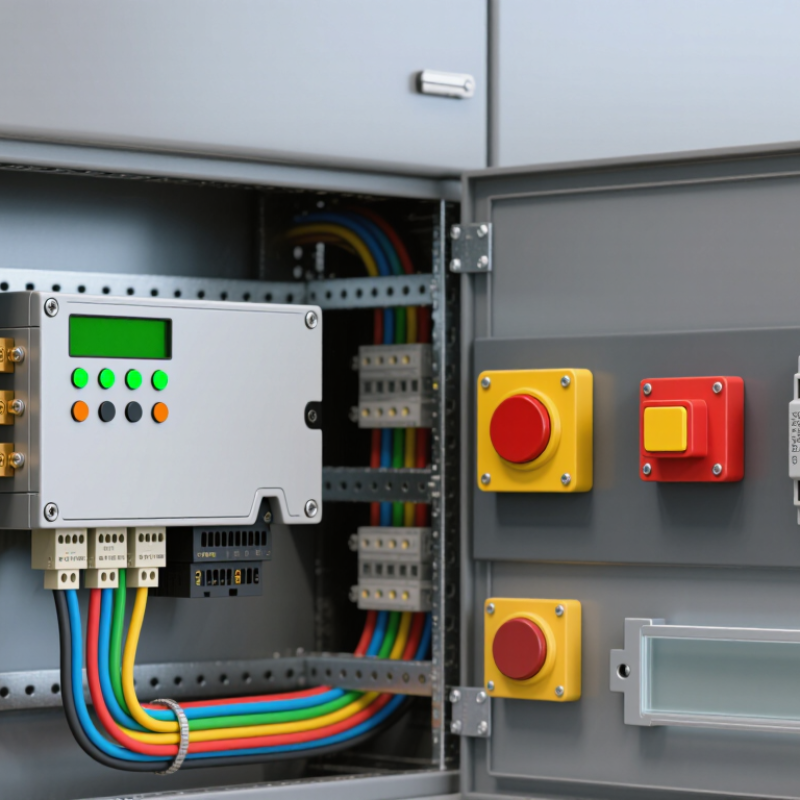
The XPSMCMCP0802 is a configurable safety-controller CPU for monitoring machine hazards and controlling protective responses. Its onboard terminals provide eight safety inputs, two safety outputs, and two test outputs. Inputs can receive signals from devices such as emergency-stop buttons, guard switches, and light curtains. The controller evaluates those signals against programmed safety logic. If a guard opens, for example, it can switch off a safety output and stop hazardous motion. The test outputs help detect certain wiring faults. Short response paths matter.
In a machine cabinet, the CPU can work with compatible expansion modules to add input or output capacity. Its actual function depends on the configured logic, connected devices, and verified system design; the module alone does not make a machine safe. That detail is easy to overlook. The International Federation of Robotics’ World Robotics 2024 report counted 4,281,585 industrial robots operating worldwide in 2023, a 10% year-over-year increase. More automated equipment makes dependable safety monitoring increasingly important, but that industry figure does not measure this controller’s performance. Engineers should check the exact wiring, diagnostic behavior, and application requirements before commissioning. Real installations can be less tidy than diagrams suggest.
What Is the Best XPSMCMCP0802 Type in 2026?
For an XPSMCMCP0802 setup, the best configuration is the one that matches the machine’s actual safety functions, not the one with the most modules. Start by listing each emergency stop, guard switch, and reset station, then compare that list with the controller’s supported inputs and expansion options. Keep it simple. Leave room for future changes, but avoid adding modules that serve no clear purpose.
Compatible safety modules should be checked against the controller’s exact hardware revision, configuration software, and connection requirements. Confirm these details in the current technical documentation before ordering. A module that looks suitable may still use a different connector or require a specific system arrangement. Check input and output capacity, power needs, and diagnostic features together. Small details matter. A labeled cabinet drawing and a module-by-module wiring schedule can prevent confusing field changes later.
During commissioning, test each safety function individually and record the results. Verify that faults are detected and that reset behavior matches the intended design. A spreadsheet helps, though it will not catch every wiring mistake. I would also recheck the selected modules after any machine change; compatibility is not just a part-number question. Keep the final configuration traceable, with revision details and approved documentation stored beside the machine records.
Base controller I/O configuration
The base unit is specified with 8 safety inputs, 2 safety outputs, and 2 test outputs. Expansion modules can add functions or I/O; confirm the exact module combination and safety requirements against the current product documentation before designing a system.
What Is the Best XPSMCMCP0802 Type in 2026?
How to Assess XPSMCMCP0802 Options for 2026
Assess each option against the machine’s actual safety functions, not just its listed price. Confirm required input and output counts, expansion capacity, response time, diagnostic features, and compatibility with existing wiring. Check the latest technical documentation for the exact module revision. Small differences matter. A mismatch can mean cabinet rewiring or a redesign.
Review operating conditions, too. Measure available panel space, ambient temperature, supply voltage, and expected service life. The International Energy Agency’s Energy Efficiency 2023 report says industry used about 37% of global final energy demand in 2022. That figure does not predict a controller’s power use, but it supports checking system energy and heat loads rather than ignoring them. Fit matters.
For safety-related machinery, verify that the complete design meets the required performance level and applicable standards, such as IEC 61508 or IEC 62061. A module’s specification alone does not establish system compliance. Ask for evidence of testing, firmware revision details, and replacement availability. A tidy comparison sheet can still miss installation realities. Check the terminal layout against the actual cabinet, then confirm response times under the intended configuration. Published data helps, but it cannot replace a site-specific review.
The XPSMCMCP0802 is a modular safety-controller base unit. The best configuration depends on the required safety I/O, system architecture, and verified compatibility—not on a universal “best” variant.
| Assessment Area | XPSMCMCP0802 Baseline | How to Assess It for Your Application | 2026 Selection Guidance |
|---|---|---|---|
| Controller type | Modular safety-controller base unit. | Confirm whether a modular controller suits the machine’s safety architecture and whether the required expansion modules are supported. | Choose this base unit when its verified I/O and system capabilities match the design. Do not assume every module or accessory is compatible. |
| Supply voltage | 24 V DC. | Check the available control supply, allowable voltage range, power-supply capacity, and installation conditions against the current product documentation. | Use only where the control cabinet’s supply arrangement meets the specified requirements. |
| Safety inputs | 8 safety inputs. | Count the required safety input points for devices such as guard switches, emergency-stop devices, and other safety sensors. Account for the wiring method used by each device. | Consider compatible expansion I/O or a different controller architecture if the verified input capacity is insufficient. |
| Safety outputs | 2 safety outputs. | Compare the required number and electrical characteristics of safety outputs with the loads and external switching devices in the design. | Check output topology, load limits, and application requirements in the current technical data before finalizing the configuration. |
| Expansion needs | Part of a modular controller family; the exact expansion capability depends on supported modules and system configuration. | List additional safety I/O, diagnostics, and communication needs, then verify module compatibility, limits, and installation rules. | Select expansions only after confirming the complete configuration in the applicable documentation and design tools. |
| Safety performance | Safety performance depends on the controller, connected devices, wiring, configuration, and validation of the complete safety function. | Determine the required performance level or safety integrity level from the machine risk assessment, then validate the entire safety-related control system. | Do not treat a controller rating as proof that the complete machine safety function meets its target. |
| Diagnostics and communication | Available functions depend on the selected system configuration and compatible accessories. | Identify the required diagnostic detail, field communication, and maintenance workflow. Verify supported interfaces and protocols for the exact configuration. | If networked diagnostics are essential, confirm the required communication components and software support before purchase. |
| Best-fit decision | Potentially suitable when its verified 8-input and 2-output baseline aligns with the application. | Compare the approved product documentation, I/O schedule, environmental requirements, lifecycle information, and total system cost. | For 2026, select the configuration that meets documented requirements and is available through an authorized supply channel; verify current status and specifications before ordering. |
Specifications and availability can change. Confirm the latest technical documentation for the exact product and configuration, and have the complete machine safety system designed, verified, and validated by qualified personnel.
What Is the Best XPSMCMCP0802 Type in 2026?
Comparing Performance, Compatibility, and Installation Needs
The best XPSMCMCP0802 setup depends on the machine’s risk assessment, not its feature count. Check the required safety performance level against ISO 13849-1 or IEC 62061 before choosing modules. The U.S. Bureau of Labor Statistics recorded 5,283 fatal work injuries in 2023; that figure covers all industries, but underscores why safety functions need careful validation. Do not treat a controller alone as proof of machine safety.
Compare response time, diagnostic coverage, available safety inputs and outputs, and communication needs with the existing equipment. Verify the exact model suffix, firmware, module combinations, and wiring requirements against current technical documentation. A mismatch may prevent commissioning. Installation details matter: confirm enclosure space, supply voltage, grounding, terminal access, and separation of safety wiring from noisy power conductors. Leave room for maintenance. A cramped cabinet is harder to inspect.
During commissioning, test each emergency stop, guard switch, and reset sequence under realistic operating conditions. Record the results, then recheck them after changes. BLS injury totals cannot predict a specific machine’s risk, and product descriptions cannot replace an application review. That distinction is easy to overlook. When compatibility or required performance remains uncertain, have a qualified machine-safety professional review the design before installation.
Choosing the right XPSMCMCP0802 setup starts with the machine, not the part number. Map each safety function to a real hazard, such as a guard door opening beside a moving belt. Then list the required inputs, outputs, reset method, and response time.
Small panels matter. A crowded cabinet can make wiring checks slow and fault tracing frustrating. Allow room for labeled terminals, clear cable routes, and future maintenance.
Check the current technical documentation for supported modules, wiring limits, configuration rules, and environmental ratings. Do not assume that a familiar-looking connector proves compatibility.
For a compact cell, a simpler arrangement may reduce commissioning errors; a larger machine may need separated zones and clearer fault isolation. Keep a record of settings and test each safety function under realistic operating conditions.
A reset should not restart hazardous motion by itself. That detail is easy to overlook.
Have a qualified controls professional review the design, validate the completed system, and document any changes. The best setup is the one that fits the application and remains understandable months later, even when the original installer is unavailable.
I would not treat a neat wiring diagram as proof that the whole system is safe.
