China Best Vacuum Air Flow Meter Suppliers for Global Buyers
China’s vacuum equipment industry has become an important sourcing base for global manufacturers. The opportunity is real, but product claims need careful verification. A Vacuum Air Flow Meter must deliver stable readings under low-pressure conditions, changing gas loads, and demanding production cycles.
MarketsandMarkets reports that the global flow meter market is expanding, supported by process automation, energy management, and industrial digitalization. Its research highlights accuracy, repeatability, communication functions, and application-specific design as major purchasing factors. Grand View Research also identifies semiconductor, pharmaceutical, chemical, and laboratory industries as important users of vacuum-related measurement equipment. These findings explain why international buyers increasingly compare Chinese suppliers by calibration capability, not only by price.
Accuracy matters. A few unstable readings can affect pump selection, leak testing, coating thickness, or chamber recovery time. Reliable suppliers should provide measurement ranges, gas-correction methods, temperature compensation details, response time, and calibration certificates. ISO 21360 guidance on vacuum technology supports standardized approaches to gas-flow measurement and performance evaluation. Buyers should also examine traceability, test records, warranty terms, and technical support after delivery.
China offers broad manufacturing capacity, flexible customization, and competitive lead times. However, supplier quality is not uniform. Some product pages remain vague, and published specifications may need independent confirmation. That is where practical experience becomes valuable: request sample data, review installation drawings, and test performance under real operating conditions. No supplier is perfect. The best choice balances verified engineering, transparent communication, documented quality control, and long-term service reliability for global buyers.
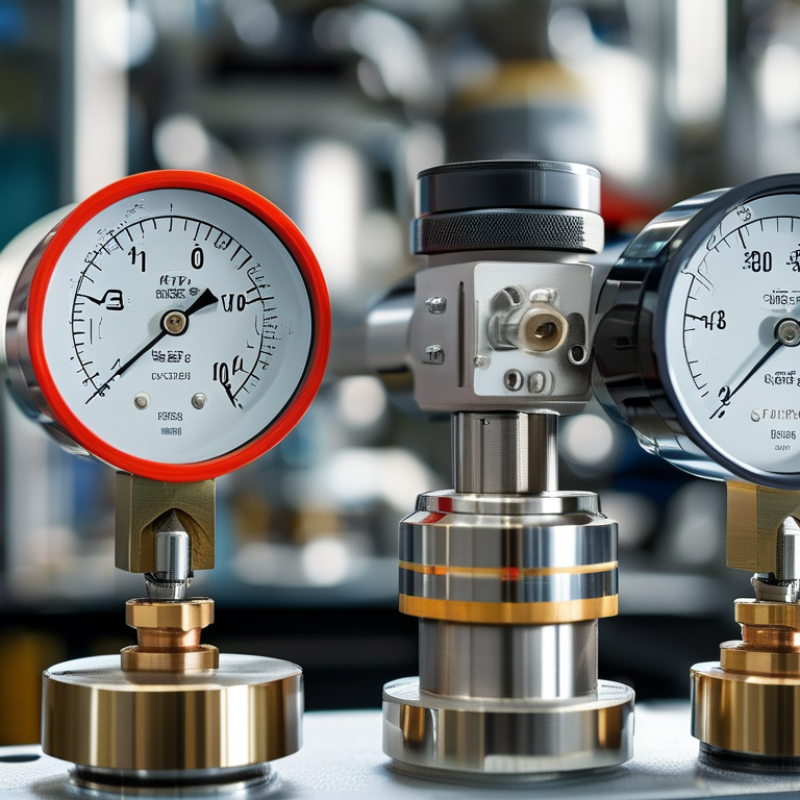
What Is a Vacuum Air Flow Meter and How Does It Work?
A vacuum air flow meter measures gas movement through a low-pressure system. It does not simply count air volume. The instrument detects pressure, temperature, or heat transfer changes, then converts them into flow readings.
Many models use a laminar flow element. Gas passes through narrow channels, creating a stable pressure drop. A differential-pressure sensor measures this drop. The controller then calculates flow using calibrated gas properties. Thermal mass meters use a heated sensor instead. Moving gas carries heat away, and the temperature difference indicates mass flow.
The reading depends on gas type, pressure, temperature, and leakage. A meter calibrated for nitrogen may not deliver accurate results with air. Vacuum conditions also make small leaks significant. The ISO 21360-1 vacuum measurement framework highlights the need to define pressure and throughput conditions clearly. NIST Technical Note 1297 recommends reporting expanded uncertainty with a coverage factor of k=2, which commonly represents about 95% confidence. That detail is often overlooked.
Tips: Install the meter near the test point. Keep tubing short and clean. Confirm whether the display shows actual or standard flow. Record gas composition and calibration date. A quick zero check can reveal drift, but it cannot replace laboratory calibration. In practice, operators sometimes trust stable numbers too quickly. That is a weakness worth reviewing. Test conditions change.
Key Specifications for Comparing Vacuum Air Flow Meters
Global buyers should compare vacuum air flow meters by measurement range, not catalog appearance. A useful range should cover normal operation and short process spikes. The 2024 Global Vacuum Equipment Market Report estimates steady market growth through 2030, increasing demand for repeatable flow verification. However, market growth does not guarantee consistent instrument quality.
Accuracy and repeatability require separate checks. Accuracy describes closeness to the reference value. Repeatability shows performance during repeated tests. For low-pressure systems, specify the percentage of reading and the percentage of full scale. A ±1% full-scale meter can create serious errors near its lower limit. Short response time matters too. Under 100 milliseconds can help detect unstable pump behavior, but faster is not always better. Confirm gas type, temperature limits, pressure range, leak tightness, and output signals. NIST Technical Note 1297 recommends reporting measurement uncertainty, while ISO/IEC 17025 supports traceable calibration practices. Ask for calibration uncertainty, test conditions, and calibration intervals.
Do not overlook contamination control. Oil vapor, particles, and moisture can shift readings over time. Stainless-steel wetted parts may suit demanding processes, but compatibility must be verified. I would also compare zero stability after thermal cycling. This detail is often missed. A supplier’s specification sheet may look complete, yet omit recovery time or low-end accuracy. That omission deserves questions.
China Best Vacuum Air Flow Meter Suppliers for Global Buyers
Key Specifications for Comparing Vacuum Air Flow Meters
How to read this comparison: The chart compares commonly used vacuum air-flow measurement technologies by typical maximum rated flow capacity and stated flow accuracy. Flow capacity is shown in standard liters per minute (SLPM), while accuracy is shown as a percentage of reading.
Thermal mass meters offer broad turndown and direct mass-flow measurement. Laminar-flow and differential-pressure meters are suitable for higher flow rates, while Coriolis meters generally provide higher accuracy at lower flow capacities. Actual performance depends on gas composition, inlet pressure, temperature, calibration conditions, and installation.
How to Evaluate Chinese Suppliers and Manufacturing Standards
For global buyers, evaluating a Chinese vacuum air flow meter supplier starts with evidence, not polished photos. Ask for calibration records showing reference instruments, test conditions, uncertainty, and traceability. A serious factory should explain how airflow is generated and stabilized. Request a live video of the test bench, including sensors, pressure controls, and data logging. Small details matter. Look for clean tubing, labeled gauges, and consistent serial numbers.
Manufacturing standards should be checked on the production floor. Review incoming inspection for sensors, housings, connectors, and display modules. Then examine assembly instructions, torque records, firmware control, and final leak testing. Ask whether each meter is tested across its specified range, not only at one convenient point. Verify output options, such as analog signals or digital communication, against your system requirements. Quality certificates can support confidence, but they do not replace product-level test data. This is where many evaluations become too generous.
Before a large order, send a written specification and buy samples from the intended production line. Compare readings against a trusted reference under low, medium, and high flow. Record warm-up time, response stability, pressure loss, and enclosure performance. Ask how failed units are isolated and how corrective actions are documented. A supplier that answers clearly is more dependable than one offering the lowest quotation. No audit is perfect. I would still schedule a follow-up inspection after production begins, because process drift can appear after approval. Reliable cooperation depends on records, repeatable testing, and honest discussion of limitations.
Pricing, Compliance, and After-Sales Support Considerations
China Best Vacuum Air Flow Meter Suppliers for Global Buyers
When comparing Chinese vacuum air flow meter suppliers, price should not stand alone. A low quotation may exclude calibration, export packaging, software, or replacement sensors. Request a line-item quotation with testing fees, delivery terms, minimum order quantities, and payment conditions. I have seen buyers choose the cheapest offer and later pay more for missing certificates and urgent repairs.
Compliance needs practical checking. Ask for calibration records with traceable references, test methods, material details, and electrical safety documents. Depending on the destination, electromagnetic compatibility, restricted-substance, and product-marking requirements may apply. Confirm which documents match your application, not just the market. A certificate with the wrong model number is nearly useless.
After-sales support often reveals supplier reliability. Check warranty length, response times, remote troubleshooting, and access to replacement sensors or seals. Ask whether the supplier can recalibrate instruments after extended use. Clear manuals and stable communication matter on a busy production floor. Short answers are a warning.
Do not rely only on sample performance. Test repeatability, leak sensitivity, display stability, and readings under your actual vacuum range. Suppliers may provide excellent samples but weaker batch control. That possibility deserves written inspection criteria. Also, agree on spare-part availability and service charges before placing an order. Forecasting demand is imperfect, so flexible support can protect the total cost of ownership.