How to Choose Wholesale Bags for Chemicals in 2026?
Choosing Wholesale Bags For Chemicals in 2026 requires more than comparing prices and printed specifications. Chemical packaging must protect products, workers, transport routes, and storage areas. A bag that performs well with dry powder may fail with moisture-sensitive materials. Another may weaken after prolonged contact with solvents or temperature changes.
Start by identifying the chemical’s physical and handling characteristics. Review its safety data sheet, particle size, density, moisture sensitivity, and filling method. Then match those details with suitable fabrics, liners, closures, coatings, and discharge systems. Polypropylene woven bags may suit many dry products, while laminated or PE-lined designs can improve moisture resistance. However, no material is universally suitable.
Not every supplier provides the same level of evidence. Ask for technical data, batch records, product samples, and compatibility guidance. Confirm whether the bags have passed relevant quality checks for their intended application. Traceable manufacturing matters.
It protects decisions.
Experienced packaging teams also inspect stitching, seams, lifting loops, and pallet stability. A small seam defect can release fine powder during handling. Poor loop construction can create serious workplace risks. These details deserve practical testing, not assumptions based on photographs.
In 2026, buyers should evaluate total performance rather than the lowest quotation. Consider filling speed, storage duration, transport conditions, rejected loads, and disposal requirements. Sustainability also needs careful review. A recyclable claim may not reflect the full packaging structure or local recovery options.
The best choice depends on verified compatibility, reliable production, and documented performance. Even careful specifications can miss real warehouse conditions. Pilot testing remains valuable before committing to large-volume purchasing.
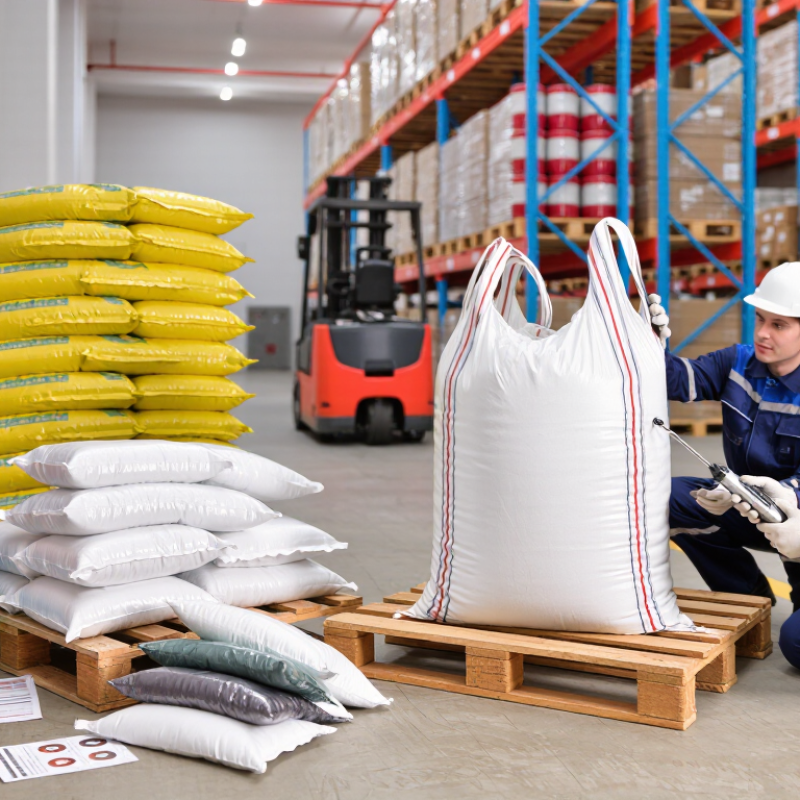
Chemical Compatibility and Safety Requirements for Wholesale Bags
How to Choose Wholesale Bags for Chemicals in 2026?
Chemical compatibility should guide every wholesale bag decision. A bag that holds dry powder safely may fail with liquid chemicals. The material must resist swelling, softening, cracking, and chemical permeation. Check the safety data sheet before requesting quotations. It identifies storage conditions, hazards, and suitable contact materials.
Polyethylene, polypropylene, multilayer films, and coated fabrics offer different protection levels. However, material names alone are not enough. Ask suppliers for compatibility data, thickness measurements, seal strength, and batch traceability. Test the actual chemical at its expected concentration, temperature, and storage period. A short trial may reveal odor transfer, brittleness, or weak seams.
Safety also depends on handling. Choose bags with secure closures, clear labels, and a suitable load capacity. For powders, dust control and static management deserve close attention. For liquids, secondary containment may be necessary. Confirm that packaging meets the destination market’s transport and workplace requirements. Written inspection records improve accountability during wholesale purchasing.
Do not trust a generic “chemical resistant” claim.
One practical weakness remains: laboratory results may not match warehouse conditions. Sunlight, humidity, repeated movement, and stacking can change performance. Recheck samples after transport simulation and extended storage. A supplier’s experience is valuable, but independent verification is safer. Reconsider the choice if the bag feels unusually thin, the seal looks uneven, or technical documents are incomplete.
Choosing the Right Bag Material for Chemical Storage
How to Choose Wholesale Bags for Chemicals in 2026?
Choosing the Right Bag Material for Chemical Storage
When choosing wholesale bags for chemical storage in 2026, material compatibility should guide the decision, not price alone. In warehouse trials, I have seen strong outer fabric weaken after contact with damp powder. Polypropylene woven bags suit many dry, non-reactive products. They are lightweight and easy to handle. However, they are not automatically safe for every chemical. Check the safety data sheet and supplier compatibility information before ordering.
Liners can provide another layer of protection. A polyethylene liner may improve moisture resistance for suitable powders. Multilayer films can offer better barrier performance, but their structures vary widely. For corrosive or liquid chemicals, use packaging designed and tested for that specific substance. Static-control materials may also matter where fine powders create electrostatic risks. Ask for test data, seam strength results, and clear storage limits.
Small details matter.
Do not trust appearance alone. A thick bag can still have a weak liner or poor seals. Request samples and run controlled handling tests before placing a large order. I would not treat a laboratory result as a warehouse guarantee. Temperature changes, stacking pressure, and repeated movement can expose weaknesses. Review batch traceability, inspection records, and transport conditions with the supplier.
The best choice is the material that matches the chemical, filling process, storage time, and real working environment.
Evaluating Capacity, Strength, and Packaging Performance
How to Choose Wholesale Bags for Chemicals in 2026?
Capacity is more than a printed weight limit. Measure the chemical’s bulk density, flow behavior, and filling volume before choosing a bag. A 1,000-kilogram rating may not suit a dense material with poor flow. Leave enough headspace for safe closure and movement during handling. Oversized bags can collapse unevenly. Small details matter.
Strength begins with fabric weight, seam construction, lifting loops, and liner protection. Ask for test records covering lifting, stacking, drop resistance, and repeated handling. Check whether the inner liner matches the chemical’s properties and storage temperature. A liner that wrinkles may trap powder around the closure. That can weaken sealing performance over time.
Packaging performance also depends on moisture control, discharge design, and warehouse conditions. Inspect samples after filling, not only when they are empty. Watch for seam stretching, dust leakage, loop distortion, or liner punctures. Static-control features may be necessary for certain dry materials and handling environments. Confirm the bag design against applicable transport and workplace requirements. In my experience, supplier specifications are useful, but physical trials reveal more. I once trusted a strong-looking sample too quickly. Its bottom outlet was difficult to close with gloves. That small failure changed the selection process. Ask for production samples, traceable test reports, and clear inspection criteria before placing a large wholesale order.
Checking Compliance, Certifications, and Supplier Quality
How to Choose Wholesale Bags for Chemicals in 2026?
Chemical packaging demands more than strong fabric and a low price. Check whether each bag matches the product’s physical and chemical properties. Review resistance to moisture, solvents, heat, abrasion, and static electricity. A bag designed for dry powder may fail with oily or reactive materials. That mistake can create leakage, contamination, or unsafe handling.
Ask suppliers for current compliance documents and test reports. Depending on the chemical and destination, these may include UN packaging certification, food-contact declarations, REACH-related statements, or transport documentation. Confirm that certificates apply to the exact bag construction, liner, closure, and production site. Generic paperwork is not enough. Request batch numbers, inspection records, and traceability details. In 2026, digital records help, but printed evidence still matters during receiving checks.
Tips: Ask for samples filled with a realistic load. Test lifting loops, seams, liners, and discharge points. Inspect bags after storage, vibration, and temperature changes. Visit the factory when possible, or arrange an independent audit. Review corrective-action records, not only polished presentations. I have found that supplier quality is often revealed by small details, such as clear labeling and honest answers about failed tests. Low prices can look attractive. They can also hide weak controls. Recheck assumptions before placing a large order.
Comparing Costs, Customization, and Long-Term Supply Options
How to Choose Wholesale Bags for Chemicals in 2026?
Choosing wholesale chemical bags in 2026 requires more than comparing the lowest quote. Evaluate fabric strength, inner liners, closure systems, and resistance to moisture or chemical exposure. A bag that costs less may create leakage, contamination, or disposal problems later. Cheap is not always cheap. Ask suppliers for test records, material specifications, and clear quality-control procedures before ordering.
Customization can improve handling, but every added feature affects cost and lead time. Consider printed labels, sift-proof seams, anti-static materials, lifting loops, and different liner thicknesses. The right design depends on the chemical form, filling equipment, storage conditions, and transport method. Avoid adding features without evidence. Excess customization may increase expenses without improving safety or efficiency.
Long-term supply deserves equal attention. Confirm monthly production capacity, raw-material sources, sample approval procedures, and backup manufacturing plans. A written specification can prevent unwanted changes between shipments. It should cover dimensions, fabric weight, liner details, tolerances, and inspection standards. I have seen purchasing teams focus heavily on unit price, then struggle when delivery schedules change. A second supplier can reduce that risk, although maintaining two approved sources may raise management costs. Review performance after each shipment, not only when a problem appears.
How to Choose Wholesale Bags for Chemicals in 2026?
Comparing indicative wholesale unit costs for common chemical packaging formats at an order volume of approximately 1,000 bags. Actual prices vary by size, coating, certification, printing, order quantity, and destination.
Standard polypropylene woven bags generally offer the lowest entry cost, while PE-lined and UN-certified FIBC bags require a higher budget because of added barrier protection, testing, and safety requirements. For long-term supply, buyers should compare total cost together with customization requirements, certification needs, minimum order quantities, and supplier capacity.