
Choosing the right Industrial Floor Scrubber is rarely as simple as selecting the largest machine. Floor size, surface texture, soil type, traffic, and water access all influence the decision. A compact walk-behind scrubber may suit a crowded retail aisle. A ride-on model may clean a warehouse floor faster, but only with enough turning space.
Hartmut Jenner, CEO of Kärcher, has described the wider purpose of professional cleaning: “Cleaning creates safety, health, and quality of life.” That idea applies directly to industrial floors. A scrubber should remove oil residue, dust, rubber marks, and embedded grime without damaging the surface. It should also support safer movement, controlled water use, and consistent results between operators. This guide examines ten major Industrial Floor Scrubber types, including walk-behind, ride-on, robotic, cylindrical, disk, orbital, battery-powered, and ride-on sweeper-scrubber machines. Each design has a different working rhythm.
Some machines look impressive but perform poorly in narrow aisles. Others seem modest yet deliver excellent results on sensitive floors. That detail matters. It is easy to overestimate speed and underestimate maintenance, drying time, or operator training. The best choice depends on actual site conditions, not showroom appeal. Readers should compare brush pressure, tank capacity, runtime, recovery performance, noise levels, and service access. No single scrubber wins everywhere. That assumption deserves a second look.
Industrial Floor Scrubbers: Purpose, Design, and Main Categories
Industrial floor scrubbers remove soil, grease, and water from large hard surfaces. Their design combines solution tanks, rotating brushes, vacuum recovery, and controlled pressure. Grand View Research valued the global floor scrubber market at approximately USD 3.2 billion in 2023, reflecting demand for faster, more consistent cleaning.
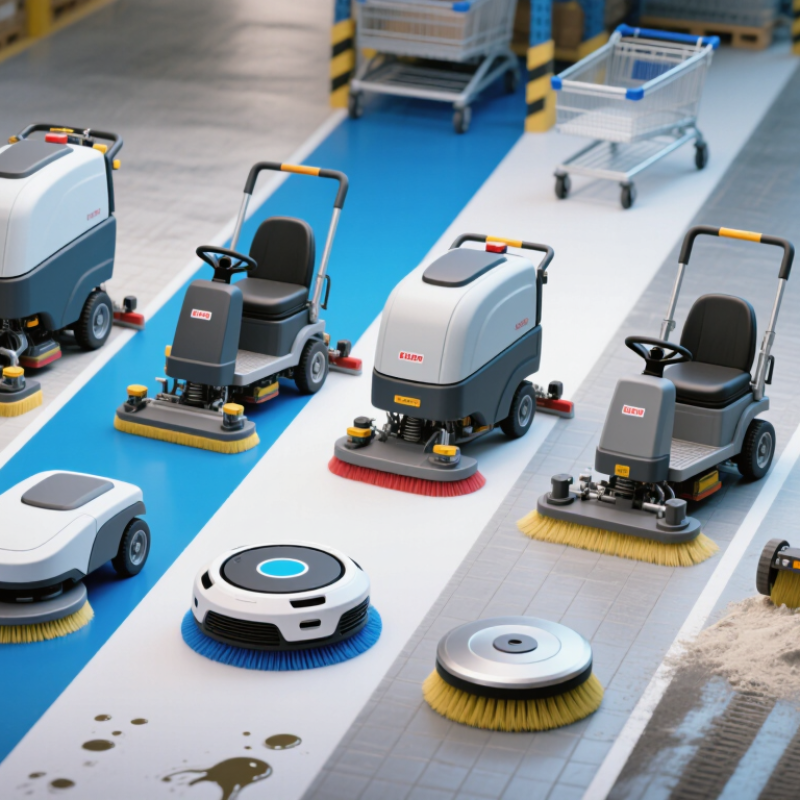
The ten main types include walk-behind, ride-on, robotic, compact, cylindrical, disc, orbital, battery-powered, corded, and sweeper-scrubber machines. Disc models suit smooth warehouse floors, while cylindrical brushes reach shallow grout lines and textured concrete. Ride-on units cover expansive logistics facilities quickly. Compact machines work better around columns, doorways, and narrow production aisles. Robotic scrubbers add route programming, sensors, and lower routine labor demands, but they still require supervision.
Battery systems reduce cable hazards, yet charging schedules affect productivity. Corded units offer steady power but restrict movement. MarketsandMarkets projects continued growth in automated cleaning equipment as facilities pursue measurable labor efficiency. That data supports automation, but not every site needs it. I have seen specifications look impressive while dirty recovery tanks reduce real performance. Floor condition, drainage, operator training, and detergent control matter just as much. A thoughtful selection begins with soil type, aisle width, floor texture, water access, and daily cleaning hours. Sometimes, the less powerful machine cleans better.
Industrial cleaning teams often choose walk-behind machines when aisle control matters. The ten main types include disc, cylindrical, orbital, rotary, compact, battery-powered, corded, low-profile, foam-control, and recovery-focused scrubbers. Disc heads suit smooth concrete and coated floors. Cylindrical brushes handle textured surfaces and collect small debris. Orbital models reduce water use during precise spot cleaning. Rotary designs provide stronger agitation, but they may require more operator control. Compact units fit narrow production lanes.
Battery-powered machines support safer cable-free movement around equipment. Corded units provide consistent runtime near fixed power points. Low-profile scrubbers reach beneath racks and processing tables.
Foam-control systems help manage detergent buildup. Recovery-focused models use stronger suction for faster floor drying. In practice, the best type depends on soil load, floor texture, aisle width, and drainage conditions.
Grand View Research reported that the global floor scrubber market was valued at approximately USD 3.9 billion in 2023, reflecting rising demand for mechanized cleaning. A 2024 MarketsandMarkets assessment also identified battery operation and compact equipment as important growth areas. These reports indicate direction, not a guaranteed return for every facility. That distinction matters.
A powerful machine can waste water on a lightly soiled floor. Operators should compare brush pressure, tank capacity, recovery performance, noise, and measured cleaning time during a site trial. Small details often decide the result.
Among the ten main industrial floor scrubber types, ride-on and stand-on models suit large floor areas best. Ride-on scrubbers let operators clean while seated, reducing walking fatigue across warehouses, airports, and distribution centers. Grand View Research’s Floor Cleaning Machines Market report identifies commercial facilities as a major demand segment, supported by larger managed spaces and stricter hygiene expectations. That trend makes productivity important, but square footage alone should not decide the purchase.
Stand-on scrubbers offer a tighter turning radius and quicker entry from the operator platform. They work well around loading bays, storage racks, and narrow production aisles. A professional cleaning assessment should compare cleaning width, solution-tank capacity, battery runtime, recovery performance, and operator visibility. The U.S. Bureau of Labor Statistics continues to report millions of building-cleaning jobs, reminding facility managers that equipment must support real workers, not just impressive specifications. Training still matters.
Small details decide results.
A ride-on machine may cover more area per hour, yet it can struggle near congested shelving or uneven transitions. A stand-on unit may maneuver better, but frequent refilling can interrupt the shift. ISSA guidance emphasizes measurable procedures, inspection, and consistent training rather than equipment selection alone. In practice, calculate productive cleaning time after charging, filling, emptying, and maintenance.
My judgment may be imperfect: many buyers overvalue theoretical speed and undervalue recovery-water control. Test both formats during a normal shift, with wet entryways, tight corners, and the floor finish actually used on site.
Industrial floors rarely present one simple problem. Oil film, metal dust, narrow aisles, and standing water can appear in the same shift. The ten most useful scrubber types include walk-behind, ride-on, compact, cylindrical, disc, orbital, sweeper-scrubber, autonomous, battery-powered, and heavy-duty combustion models. Each design serves a different working condition. Choosing by floor size alone often creates expensive mistakes.
Cylindrical scrubbers handle textured concrete and loose debris with rotating brushes. Orbital machines work well on uneven surfaces and stubborn coating residue. Disc scrubbers suit smooth floors with moderate soil. Compact units can turn inside crowded production areas.
Ride-on machines cover large warehouses quickly, while walk-behind models provide closer control around machinery. Sweeper-scrubber combinations reduce dust before washing. That matters near loading bays.
Battery-powered units support indoor air quality and quieter operations. Heavy-duty combustion models may suit open industrial yards, but ventilation and fuel storage require careful controls. Autonomous scrubbers can repeat routes in large facilities, yet they still need human supervision around changing obstacles.
In practical floor trials, brush pressure, water recovery, and drying speed deserve equal attention. A powerful motor cannot compensate for poor suction on a wet ramp. Chemical selection also matters, especially around sensitive coatings and drains. Operators should inspect squeegees daily and record soil patterns after each shift. I have seen teams choose larger tanks, then struggle with turning space.
Bigger is not always better. Floor texture, traffic, drainage, noise limits, and maintenance access should shape the final choice.
Comparing the top 10 industrial floor scrubber types starts with the cleaning environment. Walk-behind scrubbers suit narrow aisles and smaller production rooms. Ride-on models cover large warehouses faster, but require wider turning space. Cylindrical scrubbers handle textured floors and collect loose debris effectively. Rotary machines offer strong agitation on stubborn, embedded soil.
Battery-powered units reduce cable hazards and support flexible routes. Corded models can run continuously, although outlet access may limit movement. Compact orbital scrubbers work well around equipment and tight corners. Autonomous scrubbers reduce repetitive labor, but need clear paths and reliable floor mapping. Combination sweepers and scrubbers save time where dust and wet soil appear together. Escalator scrubbers serve specialized surfaces and should not be judged like general-purpose machines.
Tips: Compare cleaning width, brush pressure, water capacity, recovery capacity, noise, and turning radius. Check the actual aisle width, not only the machine brochure. Measure charging time against each shift. Ask operators to test controls while wearing gloves. A larger tank sounds efficient, but extra weight can increase transport effort and floor pressure. Review service access, replacement parts, training, and documented safety features. Cleaning speed is useful, but drying performance matters near busy walkways. I have found that theoretical coverage rates often feel optimistic in crowded facilities. Leave room for real obstacles, uneven flooring, and operator breaks. A practical trial on the dirtiest section usually reveals more than a specification sheet.
