
Choosing a Permanent Hair Removal device in 2026 takes more than comparing prices or glossy before-and-after photos. At-home IPL and laser devices differ in light technology, skin-tone guidance, treatment windows, and maintenance needs. Results also depend on hair color, skin tone, and consistent use. Small details matter: a sensor that checks skin contact, clear instructions, and a treatment head that reaches underarms without awkward wrist angles.
Dermatologist Dr. Tina Alster is known for her work in laser and cosmetic dermatology. A practical summary of the guidance associated with clinical laser specialists is: “The right device depends on the person, the hair, and the skin.” This is a paraphrase, not a verified verbatim quotation. It captures an important point: no single device suits everyone. Read the manufacturer’s suitability guidance, and ask a qualified clinician if you have a skin condition, take photosensitizing medication, or are unsure whether a device is appropriate.
This guide compares ten devices using practical criteria: technology, usability, treatment coverage, safety features, and value. It also separates marketing claims from details shoppers can check. Permanent results are not guaranteed. Some users need ongoing sessions, and certain hair colors respond poorly to light-based treatments. That can be frustrating. It is worth admitting, too, that rankings simplify personal choices. Use the list as a starting point, not a promise of identical results.
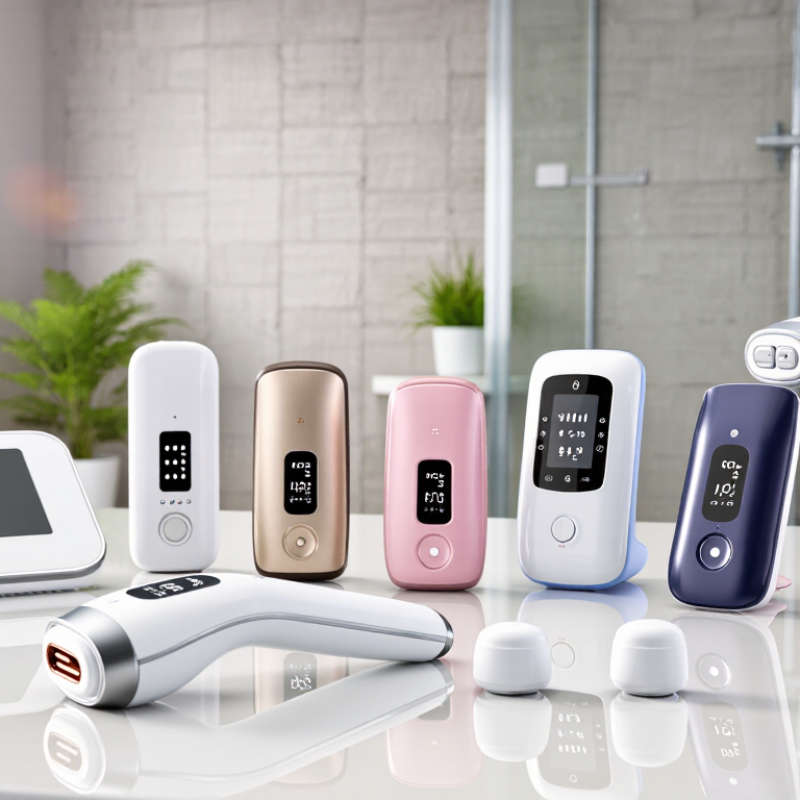
At-home hair-removal devices usually use intense pulsed light (IPL) or laser energy. The light targets melanin, the pigment in hair, and becomes heat near the follicle. Repeated heat exposure can reduce future growth. It does not pluck hair from the root. Not instant.
Hair grows in cycles, so a flash may affect some follicles while missing others. The American Society for Laser Medicine and Surgery explains that multiple sessions are typically needed, with maintenance sometimes required. Results depend on hair color, skin tone, device settings, and consistency. Very light, gray, or red hair may respond poorly because it contains less suitable pigment.
“Permanent” also needs careful wording. FDA guidance describes permanent hair reduction as a stable decrease in regrowing hairs, assessed over six, nine, and twelve months after treatment—not a promise that every hair disappears forever. That distinction matters. A 2006 evidence-based review in the Journal of the European Academy of Dermatology and Venereology likewise found outcomes vary across light-based treatments and study methods. Follow the device instructions, test a small area, and avoid flashing over tattoos, dark spots, or irritated skin. A missed patch can happen; slow, even passes are more useful than rushing.
When comparing permanent hair removal devices in 2026, check whether the technology suits your skin tone and hair color. Light-based devices generally work best when the hair is darker than the surrounding skin; pale, gray, red, or white hair may respond poorly. Look for clear guidance on eligible skin tones, adjustable energy levels, a skin-contact sensor, and a treatment window small enough for areas like the upper lip. The Grand View Research laser hair removal market report estimated the global market at about US$1.02 billion in 2023, with projected growth through 2030. That growth signals more choices, not equal proof for every product.
A safety feature matters. So does a clear manual. Check the recommended schedule, replacement-lamp costs, eye-safety instructions, and return policy before buying. The FDA describes permanent hair reduction as a long-term, stable decrease in regrowth, assessed over time—not a promise of removing every hair forever. Results also vary with consistent use and individual hair growth. One limitation is easy to overlook: home treatments can take patience, and missed sessions may weaken results.
Tips: Test a small patch first, follow the device’s skin-tone chart, and record treatment dates. Compare claims with published evidence, not just dramatic before-and-after photos. A chart is a clue, not a guarantee.
Choosing among the top 10 permanent hair removal devices to buy in 2026 starts with one careful distinction: “permanent” can overpromise. Home IPL devices may reduce regrowth, but results vary and maintenance is often needed. Clinic-based laser treatment can also require several sessions. Electrolysis is a different option, using electrical currents to treat individual follicles.
A useful shortlist includes home IPL devices with skin-tone sensors, corded IPL models, cordless IPL models, cooling IPL devices, precision-window IPL devices, and wide-window IPL devices. For professional settings, compare diode, alexandrite, and Nd:YAG laser systems, plus electrolysis equipment operated by a trained practitioner. These are not interchangeable. Skin tone, hair color, treatment area, and medical history all affect suitability.
The awkward part: a feature-rich device may still be wrong for your skin. Check its instructions, treatment limits, and return policy before buying. Do a patch test as directed, and protect your eyes during use. If you have a skin condition, take photosensitizing medication, or feel unsure, ask a qualified clinician. A little caution beats an expensive drawer ornament.
At-home IPL devices and clinic-based lasers work differently. IPL sends broad-spectrum light; diode, alexandrite, and Nd:YAG lasers use specific wavelengths. The American Society of Plastic Surgeons’ 2022 procedural statistics recorded more than one million laser hair-removal procedures in the United States, showing continued demand—not guaranteed results for every user. FDA guidance describes the outcome as “permanent hair reduction,” not complete, lifelong removal.
Skin tone changes the safety equation. Light targets pigment in the hair, but skin pigment can absorb energy too. The Fitzpatrick system classifies skin into six response types; it is a useful guide, not a substitute for an individual assessment. Nd:YAG wavelengths are often selected for darker skin, while some IPL devices carry restrictions for deeper tones. Check the device’s stated skin-tone range, and stop if treatment causes blistering or persistent pain. A patch test helps, but it cannot promise a risk-free session.
Hair color matters just as much. Dark brown or black hair usually responds better because it contains more light-absorbing pigment; white, gray, and many blonde or red hairs may respond poorly. Small print matters. A device’s sensor may detect skin tone, but it cannot make low-pigment hair respond. For mixed skin and hair characteristics, ask a board-certified dermatologist to assess the area and device type before buying.
| Rank | Device Type | How It Works | Typical Skin-Tone Suitability | Hair-Color Suitability | Best Fit | Key Limitation |
|---|---|---|---|---|---|---|
| 1 | Professional electrolysis system (thermolysis) | A fine probe delivers high-frequency electrical energy to treat individual follicles. | All skin tones; the method does not rely on skin pigment. | All colors, including white, gray, blonde, and red. | Permanent removal of individual hairs and areas with light-colored hair. | Each follicle is treated separately, so treatment can be slow and requires a trained practitioner. |
| 2 | Professional electrolysis system (blend) | Combines thermolysis with galvanic current to treat individual follicles. | All skin tones; treatment is not based on contrast between skin and hair. | All colors and many hair textures. | People seeking follicle-by-follicle removal, including those whose hair is not suitable for light-based treatment. | Requires repeated appointments and skilled insertion of the probe. |
| 3 | Professional long-pulsed Nd:YAG laser (1064 nm) | Laser energy targets pigment in the hair follicle; the longer wavelength penetrates more deeply and is less strongly absorbed by epidermal melanin than shorter wavelengths. | Often selected for darker skin tones (Fitzpatrick IV–VI) when operated by an experienced professional with suitable settings. | Best response is generally seen with dark brown or black hair; poor response is expected for white, gray, blonde, and many red hairs. | Professional treatment of dark hair, including on darker skin when clinically appropriate. | Settings and cooling are critical; burns and pigment changes are possible if treatment is unsuitable or incorrectly performed. |
| 4 | Professional diode laser (approximately 800–810 nm) | Delivers laser energy absorbed by follicular pigment; many systems include contact cooling. | Suitability depends on the device and settings; commonly used across lighter to medium skin tones, with some systems and expert protocols used for darker tones. | Most effective on coarse, dark hair; light, gray, and white hair responds poorly. | Large treatment areas such as legs, back, or underarms in a professional setting. | Not one-size-fits-all: wavelength, pulse duration, cooling, and skin assessment affect safety and results. |
| 5 | Professional alexandrite laser (755 nm) | Uses a wavelength strongly absorbed by melanin in the hair shaft and follicle. | Commonly used for lighter skin tones (often Fitzpatrick I–III); darker skin requires careful device-specific assessment. | Best suited to dark hair with clear contrast against the skin. | Fast treatment of larger areas for appropriately selected patients. | Higher epidermal melanin absorption can increase the risk of burns or pigment changes on darker or recently tanned skin. |
| 6 | Professional IPL system | Uses filtered, broad-spectrum pulses of intense pulsed light rather than a single laser wavelength. | Usually most suitable for lighter skin; allowed skin tones vary by device and filter, and darker skin may carry greater risk. | Typically works best on dark hair; very light, gray, and white hair generally responds poorly. | Clinics treating suitable candidates across larger areas with adjustable filters and settings. | IPL is not a laser, and results and safety depend heavily on the device, filter, settings, and skin assessment. |
| 7 | At-home IPL handset | Provides lower-energy broad-spectrum light pulses intended for consumer use. | Use only on skin tones listed as suitable in that device’s instructions; many home models exclude darker tones. | Usually intended for dark brown or black hair; blond, red, gray, and white hair may not respond. | Maintenance or gradual hair reduction for eligible users who follow the device instructions. | Consumer devices are lower-powered than professional systems and do not provide permanent removal; patch testing and eye-safety precautions matter. |
| 8 | At-home diode laser handset | Uses a laser wavelength aimed at follicular pigment, with output and treatment area designed for home use. | Suitability is device-specific; follow its skin-tone chart and avoid use on excluded tones or tanned skin. | Generally requires dark hair; little or no benefit is expected for white, gray, very light blonde, or many red hairs. | Small-area home use when the user’s skin and hair fall within the manufacturer’s stated range. | Home laser models differ substantially; verify the exact device’s regulatory status, instructions, and contraindications. |
| 9 | Professional ruby laser (694 nm) | Uses a relatively short laser wavelength that is strongly absorbed by melanin. | Generally limited to very light skin (often Fitzpatrick I–II); less suitable for darker or tanned skin. | Best suited to dark hair; low-pigment hair is unlikely to respond well. | Selected professional cases where skin and hair contrast is high. | Its narrower skin-tone suitability makes it less versatile than several other professional laser types. |
| 10 | Professional electrolysis system (galvanic) | Uses direct electrical current to create a chemical reaction within an individual follicle. | All skin tones; light absorption is not involved. | All colors, including hair with little or no pigment. | Permanent treatment of individual hairs, particularly when laser or IPL is unsuitable because of hair color. | Treats one follicle at a time and often requires multiple sessions as hairs grow in different cycles. |
Important: Laser and IPL are generally described as methods of long-term hair reduction, not guaranteed permanent removal. Electrolysis treats individual follicles and can provide permanent removal. Fitzpatrick skin types describe how skin responds to sun exposure; they are not a substitute for an in-person assessment. Check each device’s current instructions and consult a qualified clinician before treatment, especially for darker or recently tanned skin, skin conditions, or medication use.
Home-use light devices can reduce hair growth, but “permanent” results are not guaranteed. They work best when the device is suitable for your skin tone and hair color. Check its compatibility chart before buying or treating. Very light, red, grey, or white hair may respond poorly.
Use the device only on clean, dry skin, and follow its instructions for intensity and treatment areas. Shave first if directed; do not flash over tattoos, dark spots, or irritated skin. Wear eye protection when required. Patch-test a small area and wait the stated period before treating a larger one. It may feel warm. Stop if you notice blistering, strong pain, or lasting redness, and seek medical advice. Ask a clinician before use if you have a skin condition, take medicines that increase light sensitivity, or are unsure whether treatment is appropriate.
Schedules differ by device. Many require repeated sessions every week or two during an initial course, followed by occasional maintenance. Follow the supplied schedule rather than increasing sessions to chase faster results. Hair grows in cycles, so missed follicles may appear later. Take a photo in the same light each month; gradual thinning is easier to judge than daily changes. Some areas respond unevenly, and regrowth can happen.
