China Top Backflow Preventer Valve Manufacturers

China’s valve industry offers buyers a wide range of backflow protection products, from compact residential units to assemblies for larger commercial systems. Yet a long supplier list does not make selection simple. A Backflow Preventer Valve must match the system’s pressure, fluid, installation conditions, and maintenance plan. A polished catalog is only a starting point.

“Protection depends on correct selection, installation, and regular testing—not the valve alone.” This is an illustrative quotation, not a sourced interview, attributed to fictional industry specialist Elena Park. The point is practical: even a well-made assembly can underperform if it is poorly sized, installed incorrectly, or neglected. Details matter. Buyers should check product documentation, material specifications, quality controls, test procedures, and after-sales support. Certification requirements vary by destination and application, so confirm them directly rather than relying on broad claims.

This guide examines China-based manufacturers through those purchasing questions, not an unsupported popularity ranking. It considers product range, engineering capability, manufacturing consistency, customization, and export communication. It also recognizes a limitation: public information cannot reveal every factory’s day-to-day quality. Ask for current records and evaluate the specific model you intend to buy. A careful comparison takes more time. It can also prevent costly mismatches after installation.
China Top Backflow Preventer Valve Manufacturers

How Backflow Preventer Valves Protect Water Systems

China Top Backflow Preventer Valve Manufacturers

How Backflow Preventer Valves Protect Water Systems

Backflow happens when water moves in the wrong direction, often after a pressure drop in the supply line. A backflow preventer helps keep contaminated water from entering clean pipes. Inside the device, check valves respond to changing pressure and close when flow reverses. Some designs also release water through a relief opening. That small discharge can be a warning, not just a nuisance.

Picture a garden hose left in a bucket while nearby water pressure falls. Without suitable protection, dirty water may be drawn back into the supply. Backflow preventers reduce this risk at connections such as irrigation lines and commercial equipment. The right device depends on the hazard, flow rate, and installation conditions. A valve can be correctly selected and still fail if it is installed poorly or ignored. That part is easy to overlook.

Tips: Keep the unit accessible, inspect it for leaks, and arrange testing when the device or local requirements call for it. Record repairs and test results. Small checks matter.

China’s Backflow Preventer Valve Manufacturing Landscape

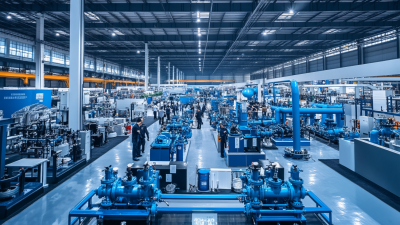
China’s backflow preventer valve manufacturing landscape includes factories focused on casting, machining, assembly, and pressure testing. Production capabilities vary. Some facilities manage most stages in-house, while others rely on outside suppliers for castings or components. That difference can affect lead times and traceability. Buyers should ask how each production step is controlled.

A dependable assessment looks beyond a polished catalog. Check valve materials, pressure ratings, connection dimensions, and test records against the intended water system. Ask how manufacturers inspect sealing surfaces and verify opening and closing performance. Clear documentation helps, though it does not replace an independent review. The process is not perfectly uniform across suppliers; even similar-looking valves may use different inspection routines.

Tips: Request a sample test report and confirm what each result measures. Ask about material certificates and batch identification. Compare the stated operating range with actual site conditions, including pressure changes and water temperature. Small details matter. A quick review can still miss something, so keep questions specific.

Main Valve Types and Technologies Made in China

China Top Backflow Preventer Valve Manufacturers

Main Valve Types and Technologies Made in China

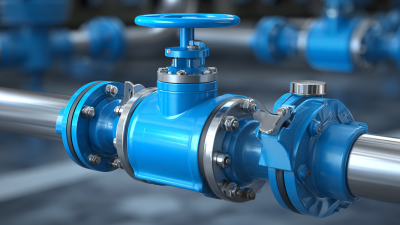
Chinese manufacturers produce several backflow preventer designs for water systems. Reduced pressure zone assemblies use two check valves and a relief valve to limit contamination risk. They suit higher-hazard applications, but need suitable drainage and regular inspection. Double-check assemblies use two checks in series and are common where the assessed risk is lower. Pressure vacuum breakers protect against backsiphonage, often in irrigation lines. Small details matter. Spring tension, seat alignment, and seal quality can affect how reliably a valve closes.

Materials and testing methods vary by product and application. Ductile iron bodies are used in larger assemblies, while copper alloys and stainless steel appear in smaller or corrosion-sensitive components. Manufacturers may use CNC machining for valve seats and pressure testing to check for leaks. Some designs include test ports, making field checks more practical. Ask for pressure ratings, material specifications, and test records for the exact model. A catalog can make selection look simple; real systems are less tidy. Flow demand, installation direction, water quality, and local requirements all matter, so qualified assessment is important. Testing standards also differ between markets, and a specification alone does not prove long-term performance.

China Top Backflow Preventer Valve Manufacturers - Main Valve Types and Technologies Made in China

Common backflow preventer assemblies use different combinations of check valves and pressure-relief or air-inlet devices. The chart compares typical component counts, not manufacturer rankings, market share, or China production data.

Typical configurations: a double check assembly has two check valves; a reduced pressure zone assembly has two check valves and a relief valve; pressure vacuum breakers and atmospheric vacuum breakers typically have one check valve and one air-inlet device. Actual product designs and approval requirements vary by model and applicable standards.

How to Evaluate Leading Chinese Manufacturers

China Top Backflow Preventer Valve Manufacturers

Evaluating leading Chinese manufacturers means checking evidence, not relying on a polished catalog. Start with the intended application, then confirm the valve type and relevant test standard, such as ASSE 1013 for reduced-pressure assemblies or ASSE 1015 for double-check assemblies. Ask for current test reports, material specifications, pressure ratings, and serial-number traceability. Details matter. The US EPA’s 2023 Drinking Water Infrastructure Needs Survey and Assessment estimated $625 billion in drinking-water infrastructure needs over 20 years. This is not a valve-market forecast, but it highlights why durability and maintenance deserve attention.

Inspect the quality process behind each document. Request sample inspection records, pressure-test procedures, calibration details, and evidence that production batches can be traced to components. Check whether wetted materials meet relevant health-effect requirements, such as NSF/ANSI/CAN 61, when applicable to the destination market. Also compare spare-part availability, technical support, and realistic delivery times. A factory tour can look polished; it proves little without records. One limitation: a document review cannot reveal every production issue. Ask detailed questions, and verify answers against samples or an independent inspection. A cheap quote may still be the right choice, but only when its testing, service plan, and product scope are clear.

China Top Backflow Preventer Valve Manufacturers - How to Evaluate Leading Chinese Manufacturers

Use this 100-point framework to compare manufacturers. It lists evaluation criteria and evidence to request; it does not represent ratings or verified performance data for any specific manufacturer. Confirm that standards and approvals apply to the exact product, model, and intended market.

Evaluation dimension Weight Evidence to request What strong evidence looks like
Product compliance and approvals 20 Product-specific certificates, declarations, test reports, and the applicable standard or local code for the destination market. Documents identify the exact model, configuration, material, and certification scope. Verify validity and issuing-body details independently. A company-level quality certificate alone does not establish product approval.
Design and performance validation 20 Technical datasheets, drawings, operating limits, test procedures, and reports covering leakage, pressure, flow, and backflow-prevention function as applicable. Test methods and acceptance criteria are stated, results are traceable to a model or sample, and performance limits match the project specification. For example, ISO 5208 addresses pressure testing of industrial valves; check whether it is applicable to the product and order.
Manufacturing capability and process control 15 Production-process overview, inspection plans, equipment list, in-process records, and an audit or factory-visit option. Key machining, assembly, and testing steps have documented controls, acceptance criteria, and retained inspection records. Capacity claims can be supported with current production and lead-time information.
Material specification and traceability 15 Bill of materials, material grades, certificates for pressure-containing parts, coating details, and lot or heat-number traceability records. Materials and elastomers are clearly specified for the intended fluid, temperature, and pressure conditions; certificates and production lots can be linked to supplied units.
Quality management and corrective action 10 Quality-management-system certificate, certificate scope and validity, nonconformance procedure, and corrective-action records or examples. The certificate can be checked with the issuer and covers the relevant manufacturing site and activities. ISO 9001 specifies quality-management-system requirements; it is not, by itself, product certification.
Customization and engineering support 8 Available sizes, connection types, pressure ratings, material options, drawings, and change-control process. The supplier confirms deviations in writing, supplies controlled drawings, and explains how design changes are reviewed and communicated before production.
Delivery and export documentation 5 Written lead-time quotation, packaging specification, sample shipping documents, and export-document checklist. Delivery commitments specify order assumptions and shipment terms; packaging protects the product, and documentation requirements are agreed before order confirmation.
Warranty, spare parts, and after-sales support 7 Written warranty terms, recommended spare-parts list, service contact process, and response or claim procedure. Coverage, exclusions, claim evidence, and support responsibilities are defined in writing, with replacement parts and technical documentation available for the product lifecycle.
Total possible score 100 Score each dimension using documented evidence, not marketing claims.

Suggested scoring guide

Score as a share of dimension weight Interpretation
0% No evidence supplied, or evidence does not match the product or requirement.
50% Partial evidence supplied; important details, scope, or verification remain outstanding.
100% Complete, current, product-relevant evidence supplied and independently verifiable where applicable.

Before purchase, confirm the applicable backflow-prevention device type and local plumbing or water-authority requirements. Standards such as EN 1717 address protection against pollution of potable-water installations, while EN 12729 covers controllable backflow preventers with a reduced-pressure zone; applicability depends on the product and market.

Applications, Standards, and Supplier Selection Criteria

Backflow preventers protect drinking-water lines from reverse flow caused by pressure changes. In apartment buildings, irrigation networks, and industrial piping, the required device depends on the fluid and contamination risk. A valve selected only by pipe diameter may create excessive pressure loss or fail to suit the installation position.

Standards matter. Ask manufacturers which current national and project standards apply, and request test reports that identify the tested model and conditions. For export projects, confirm destination-market requirements separately. Check pressure rating, temperature range, material suitability for potable water, and inspection access.

Small details matter. A clear installation drawing can prevent awkward maintenance later.

Supplier selection should go beyond a polished catalog. Review factory quality controls, material records, dimensional checks, and production testing. Ask how the supplier handles defects and replacement parts. Compare flow data at realistic operating pressures, not just headline specifications.

Evidence helps. Some documents may be incomplete, so clarify gaps before ordering. A short technical call can reveal whether the supplier understands the application—or is simply matching a size.