
Top 10 PVC Check Valve Manufacturers for Global Buyers
Choosing a reliable Pvc Check Valve manufacturer is not a simple price comparison. Global buyers must examine material quality, pressure ratings, sealing performance, testing procedures, and delivery capability. A valve that looks suitable on a product page may fail when exposed to chlorine, high temperatures, or repeated pressure changes.
Philip L. Skousen, author of Valve Handbook, stated, “A valve must perform its intended function reliably, every time.” This principle remains important when evaluating PVC check valve suppliers. Buyers should inspect body composition, diaphragm or spring design, EPDM compatibility, connection standards, and documented factory testing. Small details matter. A poorly finished thread can cause leakage before installation is complete.
This guide presents ten leading Pvc Check Valve manufacturers for international buyers. It considers manufacturing experience, product range, quality systems, customization, technical support, and export performance. The selection is not perfect. Regional availability, minimum order quantities, and certification requirements can change the final decision. Buyers should verify current data directly with each manufacturer.
For example, a wastewater project may require chemical resistance and easy maintenance. A clear-water pipeline may prioritize low cracking pressure and compact installation. Industrial users may need stronger pressure control and traceable inspection records. One supplier rarely fits every application.
Look beyond the brochure.
The best manufacturer combines dependable materials, consistent production, responsive engineering support, and realistic delivery promises. This article offers a practical starting point, not a substitute for application-specific testing or professional review.
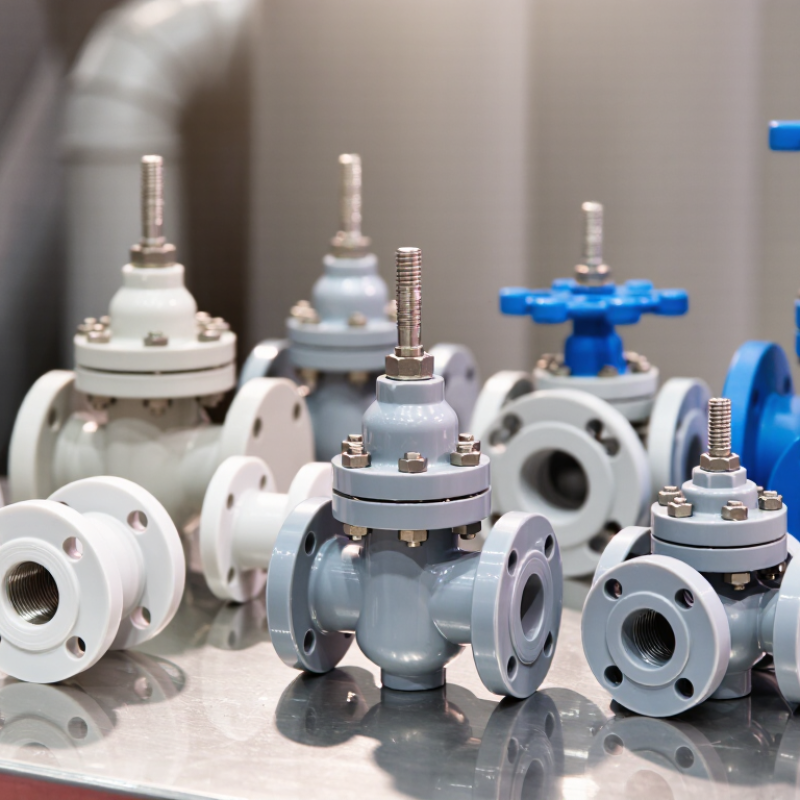
What PVC Check Valves Are and How They Work
A PVC check valve is a one-way flow device. It allows liquid to move forward and blocks reverse flow. Inside, a hinged disc, ball, or diaphragm responds to pressure changes. When inlet pressure rises, the closure element lifts from its seat. When flow stops, gravity or reverse pressure pushes it back quickly.
The mechanism is simple, but installation is not always forgiving. A small piece of pipe debris can prevent full closure. In practice, I have seen a clean-looking valve leak because the seat was scratched during assembly. PVC resists corrosion and many chemicals, yet temperature and pressure limits still matter. Always check the manufacturer’s pressure chart, fluid compatibility data, and flow-direction arrow.
Grand View Research estimates the global PVC market reached about USD 42 billion in 2023, showing the material’s broad industrial use. MarketsandMarkets projects the industrial valves market to approach USD 88 billion by 2028. These figures do not measure PVC check valves directly, but they indicate strong demand for polymer piping and flow-control equipment. One detail is often underestimated: a check valve can create pressure loss. Incorrect sizing may cause weak downstream flow, water hammer, or premature wear. Testing under real operating conditions remains wiser than trusting a catalog alone.
Top 10 PVC Check Valve Manufacturers for Global Buyers - What PVC Check Valves Are and How They Work
| No. | Buyer Evaluation Area | Relevant PVC Check-Valve Configuration | Typical Technical Data | How It Works | Global Buyer Checkpoint |
|---|---|---|---|---|---|
| 1 | Valve Body Material | Rigid PVC, commonly PVC-U | PVC-U offers low weight, corrosion resistance and suitability for many water-treatment and chemical-service applications. | The body houses the internal closing element and directs the fluid through the flow path. | Confirm chemical compatibility, temperature limits and UV-resistance requirements. |
| 2 | Connection Standard | Socket, threaded, flanged or union connection | Common systems use metric or inch dimensions; flange drilling may follow regional pipe standards. | The connection seals the valve into the pipeline and maintains alignment during operation. | Match outside diameter, nominal size, thread form and flange drilling before ordering. |
| 3 | Check Mechanism | Ball, swing, spring-loaded or diaphragm design | Ball designs are compact; swing designs generally provide low resistance; spring designs can close more quickly. | Forward pressure opens the closure element; reverse pressure or gravity moves it onto the seat. | Select the mechanism according to flow direction, installation angle and surge risk. |
| 4 | Nominal Size Range | Small-bore to large-diameter pipeline service | PVC check valves are commonly available from compact instrumentation sizes to several-hundred-millimetre piping sizes. | Correct sizing allows the required flow rate while limiting pressure loss. | Use design flow, pipe size and allowable pressure drop rather than pipe diameter alone. |
| 5 | Pressure Rating | Pressure-rated PVC body and closure assembly | Typical ratings vary by size, temperature, design and standard; many water-service products are rated around PN10 or PN16 at reference temperature. | The valve must withstand operating and transient pressure without leakage or structural failure. | Verify pressure derating at elevated temperature and distinguish working pressure from test pressure. |
| 6 | Temperature Capability | PVC-U with elastomeric seat and seals | PVC-U is generally intended for moderate-temperature service; many systems specify an upper limit near 60°C, subject to pressure derating. | Temperature affects PVC strength, seal performance and allowable working pressure. | Check the complete temperature range, including cleaning cycles and ambient conditions. |
| 7 | Seal and Seat Options | EPDM, FKM or other application-specific elastomers | EPDM is widely used for water service; FKM is selected for certain oils, fuels and higher-temperature chemical applications. | The seat forms the seal that stops reverse flow when the valve closes. | Match elastomer resistance to the actual fluid, concentration and temperature. |
| 8 | Leakage and Testing | Hydrostatic, pneumatic and seat-leakage inspection | Testing should be defined by the applicable product or project standard; test medium and pressure must be documented. | A properly seated closure prevents backflow when downstream pressure exceeds upstream pressure. | Request inspection records, acceptance criteria and traceability for critical applications. |
| 9 | Applicable Standards | Regional piping, dimensional and quality standards | Relevant references may include ISO, EN, ASTM, DIN, ASME or local potable-water requirements, depending on the project. | Standards establish dimensions, pressure tests, materials, marking and performance requirements. | Specify the required market and certification before technical approval or shipment. |
| 10 | Application Suitability | Water treatment, irrigation, aquaculture, pools and compatible chemical systems | PVC check valves are valued for corrosion resistance and low maintenance, but are not suitable for every solvent, pressure or temperature. | The valve permits one-way flow and automatically blocks reverse flow without an external actuator. | Obtain a written compatibility confirmation for aggressive chemicals and potable-water use. |
Note: Pressure, temperature and material data are typical selection references only. Final ratings depend on valve size, design, seal material, fluid and the applicable regional standard.
Related Posts
-
The Essential Role of Non Return Valves in Preventing Backflow in Industrial Systems
-
2025 Sump Pump Innovations: Discover the Top 10 Best Check Valves for Superior Performance
-
How to Choose the Right Hydraulic Quick Coupler for Your Needs?
-
China Top 10 Air Release Valve Manufacturers?
-
7 Best Quick Connect Hose Fittings for Global Buyers
-
Challenges with Using Best Non Return Valves in Industrial Applications